ASTM Product Testing
& Quality Control
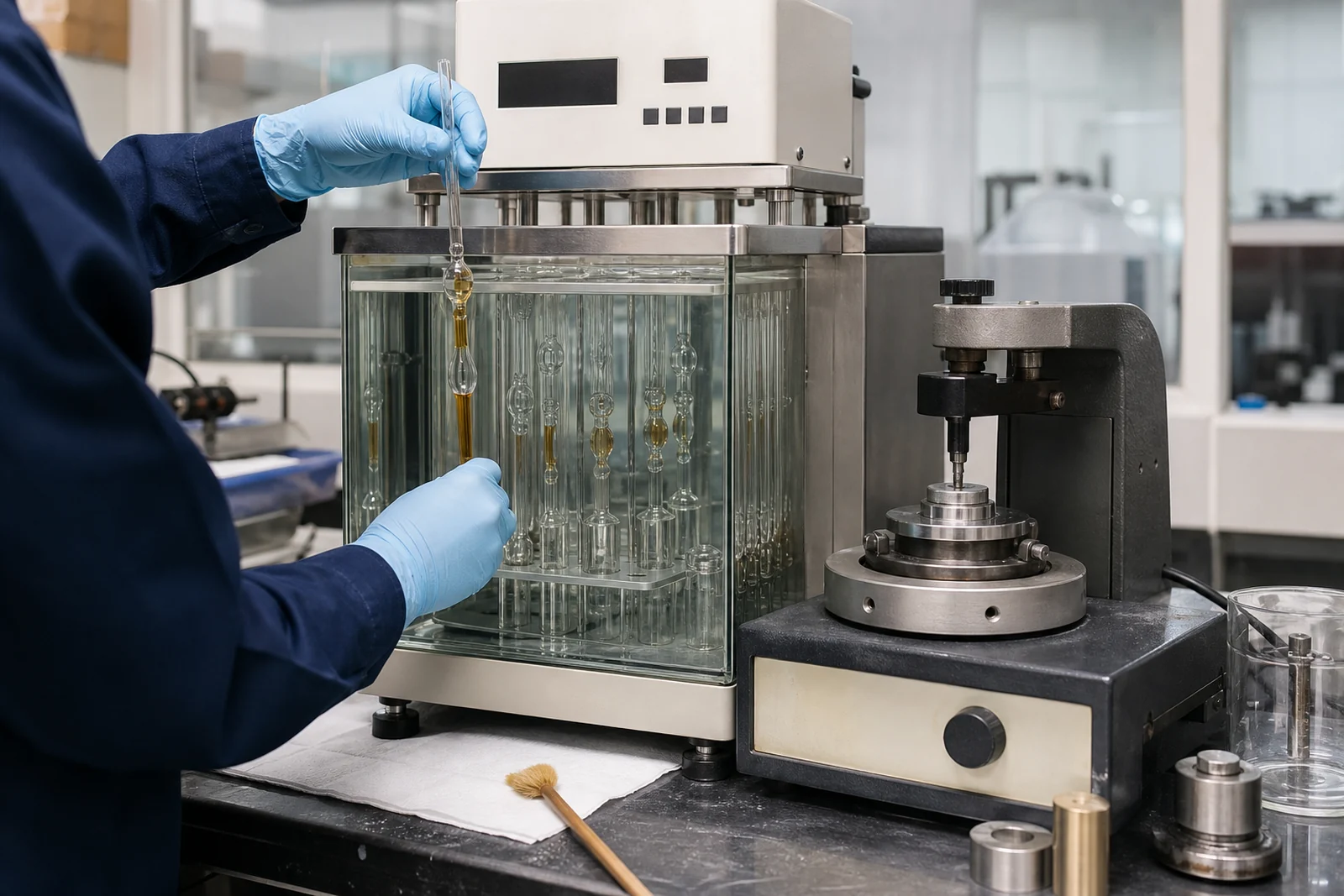
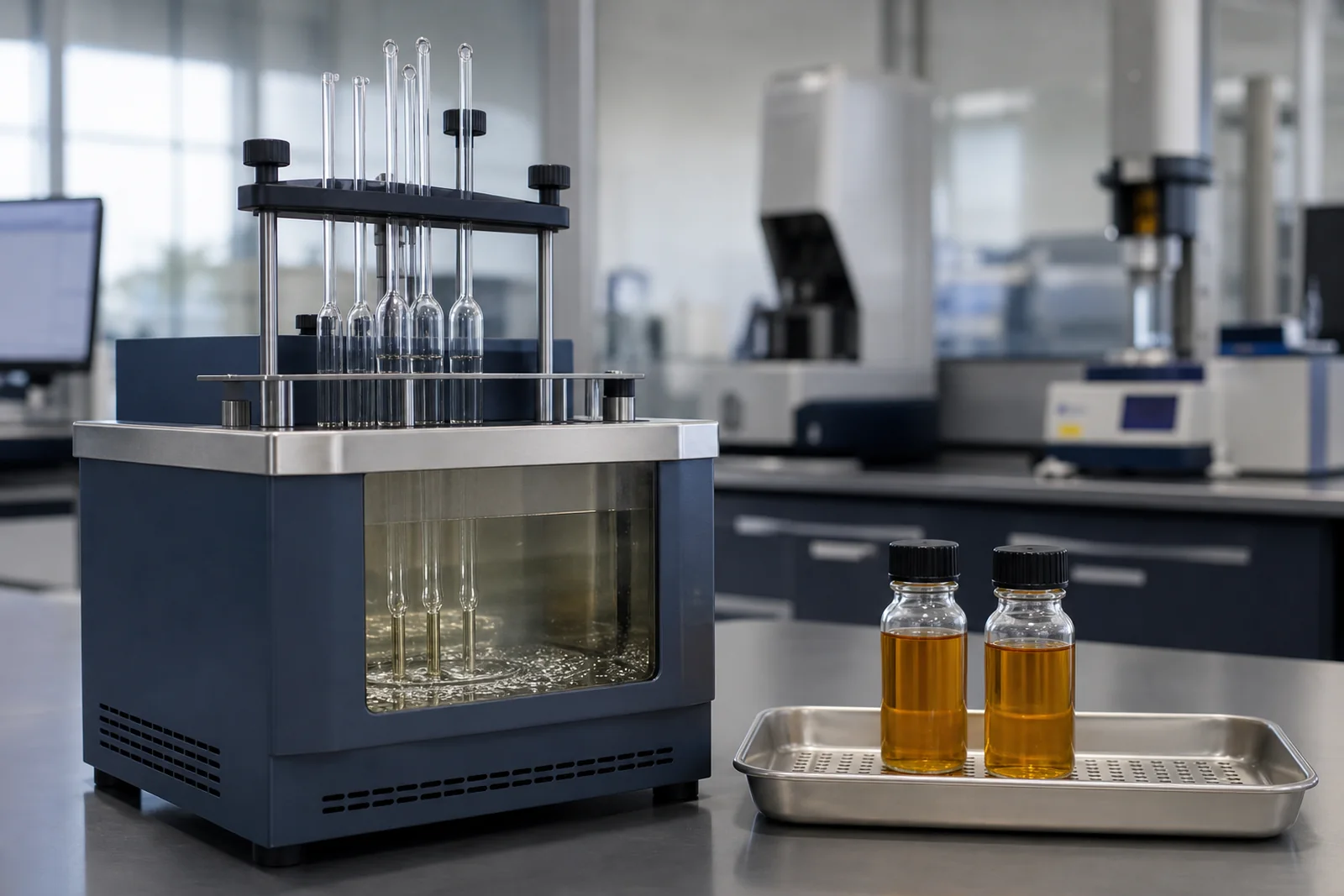
All formulations are tested to ASTM, IP, and BIS standards throughout the development process — not as a final gate check, but iteratively as the formula evolves. When a test fails, we understand why, reformulate, and retest. We also provide independent testing and production QC support for existing product lines, and for entrepreneurs looking to start a lubricant business in India.
- 01Right test matrix
- 02Interpreted result
- 03Practical QC limit
Testing is Not the End.
It's the Tool.
Most clients come to us expecting that testing happens at the end — you formulate, then you test, then you certify. In our process, testing is woven into every iteration. The first lab test is typically run within the first two weeks of a project. We interpret every result and reformulate before the next test — this is why most formulations reach their target specification within two or three test cycles, not five or six. It is the same iterative discipline that drives our lubricant product development R&D, and that anchors a longer-term annual R&D partnership.
Every ASTM Test
We Work With
| Test Name | Standard | What It Measures | Engine Oil | Gear Oil | Hydraulic | Grease |
|---|---|---|---|---|---|---|
| Viscosity & Flow Properties | ||||||
| Kinematic Viscosity at 40°C & 100°C | ASTM D445 | Viscosity grade verification, SAE classification | ||||
| Viscosity Index | ASTM D2270 | Viscosity-temperature sensitivity (higher = better) | ||||
| Pour Point | ASTM D97 | Lowest temperature of pumpability | ||||
| Safety | ||||||
| Flash Point (Cleveland Open Cup) | ASTM D92 | Fire safety — minimum temperature for ignition | ||||
| Flash Point (Pensky-Martens Closed Cup) | ASTM D93 | More accurate flash point for transport and storage | ||||
| Antiwear & Extreme Pressure | ||||||
| Four-Ball Wear Test (WSD) | ASTM D4172 | Antiwear performance — wear scar diameter at 75°C | ||||
| Four-Ball EP — Weld Point & LWI | ASTM D2783 | Extreme pressure film strength — weld load in kgf | ||||
| Oxidation & Stability | ||||||
| Rotating Pressure Vessel Oxidation (RPVOT) | ASTM D2272 | Oxidation stability — pressure drop after 150h at 150°C | ||||
| Grease Oxidation Stability (Oxygen Bomb) | ASTM D942 | Grease resistance to oxidation over time | ||||
| Corrosion & Rust Protection | ||||||
| Rust Prevention — Distilled Water | ASTM D665A | Rust inhibition in presence of fresh water | ||||
| Rust Prevention — Seawater | ASTM D665B | Rust inhibition in presence of seawater | ||||
| Copper Strip Corrosion | ASTM D130 | Corrosive effect on copper alloys (rating 1a–4c) | ||||
| Corrosion Prevention in Bearings | ASTM D1743 | Grease protection of anti-friction bearing steel | ||||
| Acid / Base Number | ||||||
| Total Acid Number (TAN) | ASTM D664 | Acid content — monitors oxidation in service | ||||
| Total Base Number (TBN) | ASTM D2896 | Alkalinity reserve — acid-neutralising capacity | ||||
| Grease-Specific Tests | ||||||
| Penetration (Worked & Unworked, 10,000 Strokes) | ASTM D217 | Consistency / NLGI grade classification | ||||
| Dropping Point (Low Temperature) | ASTM D566 | Temperature at which grease loses structure (<260°C) | ||||
| Dropping Point (High Temperature) | ASTM D2265 | High dropping point greases — lithium complex, bentone | ||||
| Water Washout Resistance | ASTM D1264 | Grease retention under water spray at 38°C and 79°C | ||||
● Typically required ○ Not applicable or not standard for this product type
Frequently Asked About
Testing & QC
Testing is conducted through NABL-accredited external laboratories — the same labs used for BIS certification applications. We manage the lab relationship, sample dispatch, and result interpretation. You receive all raw test reports plus our interpretation of every result.
For some rapid screening tests (basic viscosity checks, colour, appearance), preliminary testing may be done at a development lab before formal NABL testing. All certification-relevant results come from accredited labs.
Most single-test results come back in 5 to 10 working days from an NABL lab. The critical time constraint is RPVOT (ASTM D2272) which requires 150 hours of testing time plus lab handling — typically 18 to 25 working days total.
We schedule the RPVOT early in the process and run other development work in parallel. A full test suite including RPVOT typically takes 4 to 6 weeks when run once. We plan the test schedule at the start of every project to minimise total timeline.
Yes. For every formulation we complete, we design a practical in-house QC protocol: which tests your production lab can run on every batch (typically viscosity, flash point, colour, appearance), which tests require an external NABL lab (wear, EP, oxidation), acceptance limits for each test, and corrective action guidance when a batch is out of specification — the basis of ongoing lubricant process optimisation.
We can also advise on which equipment to procure for an in-house quality lab — a viscometer and flash point tester cover the majority of day-to-day production QC needs at relatively modest cost — specified alongside the wider lubricant & grease plant setup.
Testing Is Part Of
Every Formulation Project
Need Testing for Your
Product or Formulation?
Share what product you have, which tests you need, and what specification you are working to. We respond within one business day.