Service 03 · Own Your Formula · Reduce Treat Cost 10–25%
Additive Package Development
Reviewed by Er. Manoj Kumar — Founder & Chief Formulator · 15+ years lubricant & grease R&D
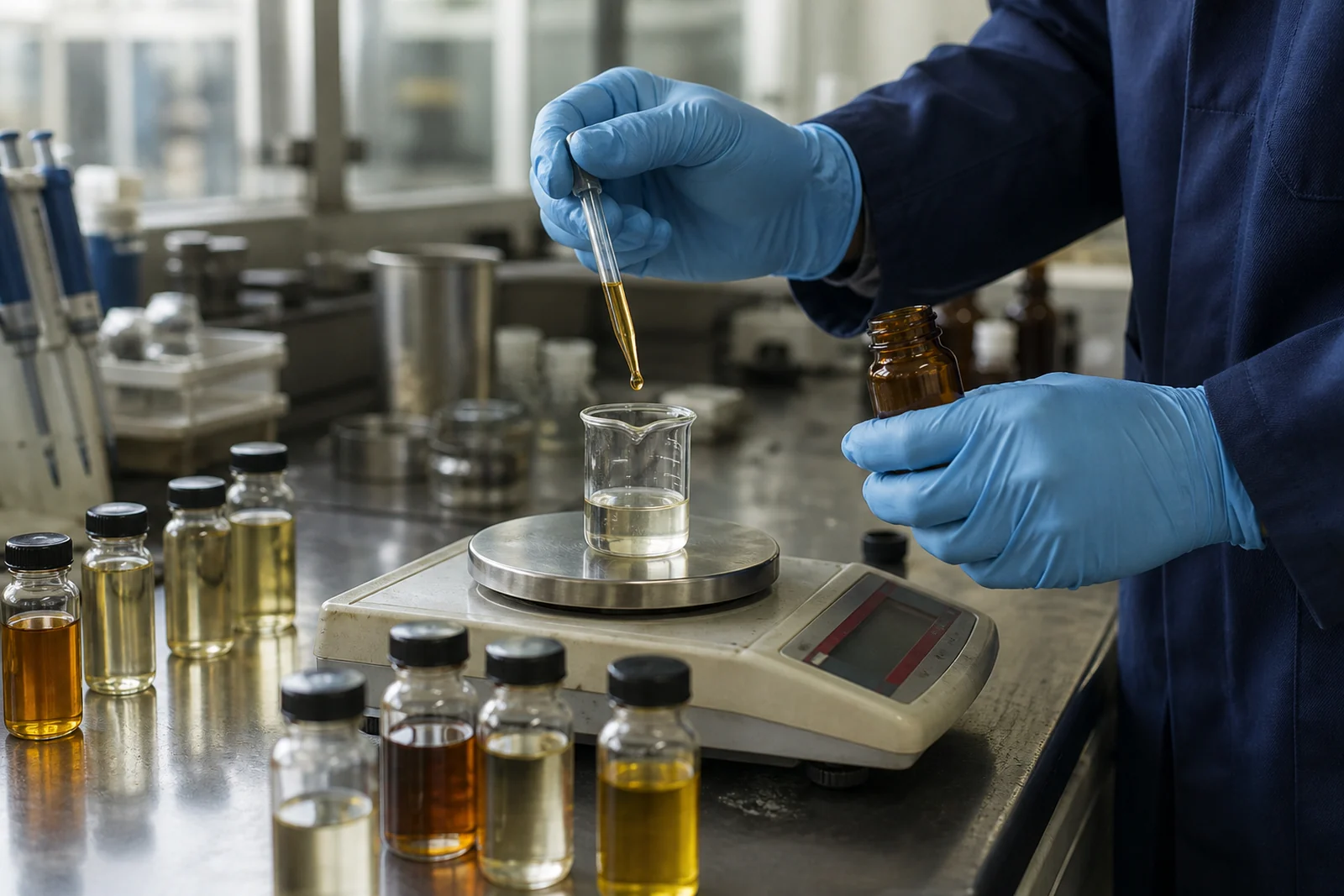
Commercial additive packages are convenient — but expensive and supplier-dependent. We design custom additive systems that match or exceed commercial performance, using individually sourced components at a treat cost typically 10 to 25 percent below what you are paying now. You own the formula completely.
Service contextFunctional components are balanced around the base oil, claim and commercial target.
9
Additive Function Classes
10–25%
Typical Treat Cost Saving
100%
IP Ownership to Client
Global
Raw Materials Sourced Worldwide
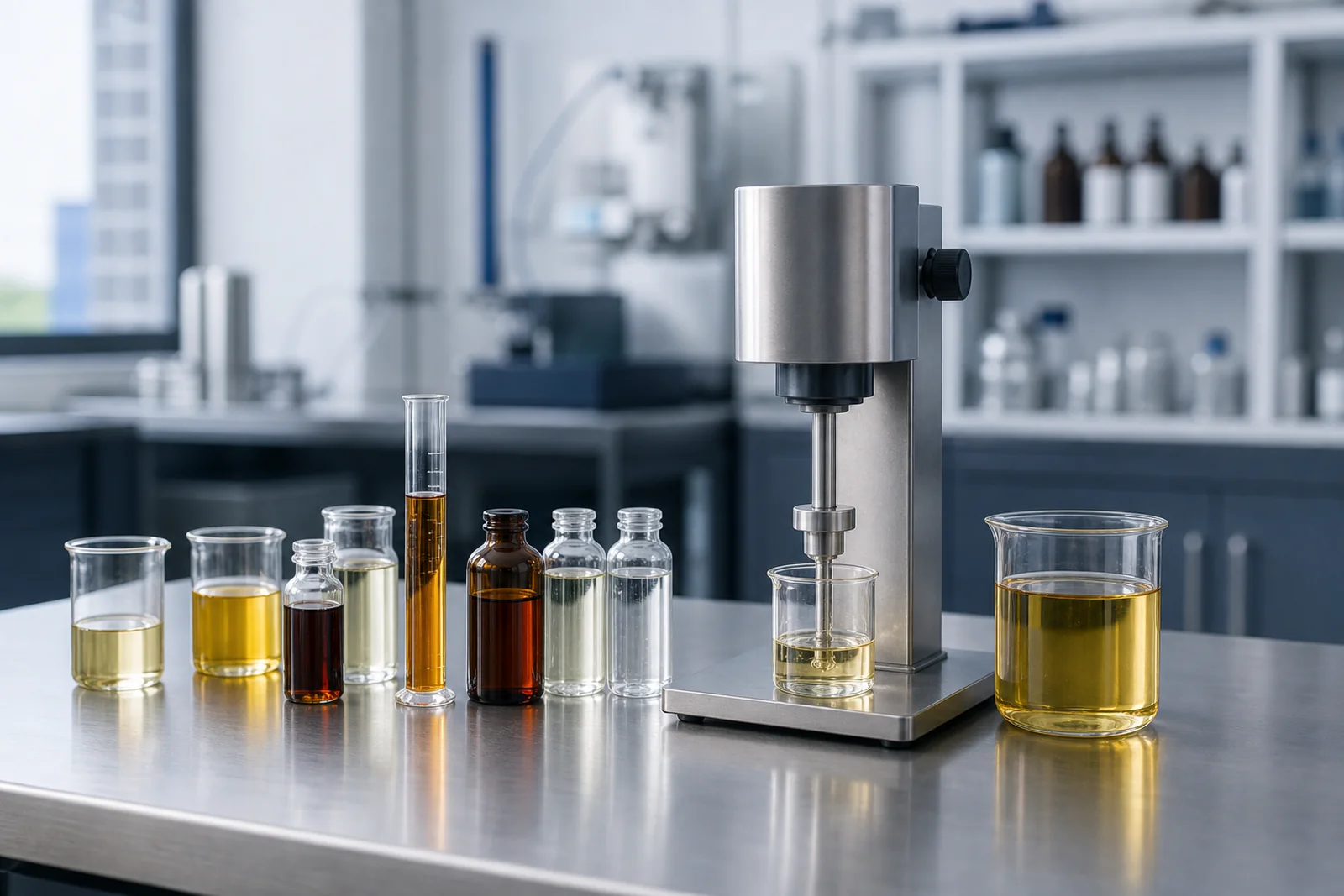
Component systemIndividual components are balanced against treat cost, base-oil compatibility and the target performance claim.
01Functional components
02Treat-cost target
03Owned package IP
The Independence Wedge
Lubrizol, Afton, Infineum — Or Build Your Own. Compared.
When an additive house such as Lubrizol, Afton Chemical, Chevron Oronite or Infineum provides “formulation support”, the support is necessarily confined to their own product range. Lubechem is independent — we design from individual additive components sourced across multiple suppliers, so the client gets the right formulation at the lowest cost and owns the IP outright. Here is the comparison side by side.
Lubrizol / Afton / Infineum / Oronite Package
Convenient. But Captive and Costly.
PricingSet by additive house
Formula transparencyBlack box (proprietary)
Component sourcingLocked to one supplier
Treat-rate adjustmentFixed by package spec
Supply-chain riskSingle point of failure
IP ownership of finished formulaAdditive house retains
Local raw-material sourcingLimited / import-led
Per-litre additive costBase line
Lubechem Custom Additive System
Independent. Transparent. Yours.
PricingMarket-sourced, transparent
Formula transparencyFull visibility, you see every µg
Component sourcingMulti-supplier, swap-able
Treat-rate adjustmentAdjustable per grade
Supply-chain riskDiversified, 2–3 sources per component
IP ownership of finished formula100% yours, unconditional
Local raw-material sourcingLocal-first worldwide (including India), import only when needed
Per-litre additive cost10–25% lower (typical)
The Lubrizol / Afton / Oronite / Infineum model is excellent for high-volume OEM-tier blenders that can absorb the premium and value the single-vendor convenience. Below approximately 25,000 litres / month of a single grade, a custom system rarely pays back. Above that volume the per-litre saving compounds quickly. We will tell you honestly whether your production scale makes a custom system worth building — see the case-study volume math in the section below. Custom additive work also feeds our broader lubricant product development R&D programme.
We start by testing your current commercial additive package or finished product against the full ASTM suite relevant to your specification. This creates a performance baseline — every property we must match or exceed in the custom system. This also reveals which performance areas have headroom and which are close to limits.
2
Reverse-Engineer the Functional Requirements
From the specification (API SP, BIS IS 13656, etc.) and the benchmark data, we map exactly which additive functions are required and at what performance level. This translates to a functional additive system blueprint: which classes are needed, at what relative treat rate, and which can be reduced without compromising the specification.
3
Source Raw Material Options
For each additive function, we identify multiple commercial raw material options available in your target market — with pricing and typical availability. We present a primary option and two alternatives for each component, giving you flexibility in sourcing. Local additive distributors (across India, the Middle East, Africa, Asia, Europe and beyond) are preferred; international options are included for components not locally available.
4
Formulate and Optimise Treat Rates
The additive components are combined at calculated starting treat rates and tested. The treat rates are then optimised iteratively — reducing where possible without dropping below specification limits, and adjusting synergistic interactions between components. ZDDP treat rate in particular affects both antiwear and antioxidant performance and must be carefully balanced.
5
Full ASTM Validation Against Specification
The final custom system is tested against every ASTM method required by the target specification. Results are compared directly to the commercial package benchmark from Step 1. We document which properties improved, which are equivalent, and provide the full treat cost calculation showing the savings per litre at your production volume.
Questions & Answers
Frequently Asked About Additive Development
At what production volume does a custom additive system make financial sense?
As a general guideline, the development cost for a custom additive system pays back within two to four months of production once you are above approximately 20,000–25,000 litres per month of a single grade. Below that volume, a commercial package is more economical.
The payback is faster at higher volumes because the saving per litre is constant but the total saving per month scales with volume. At 80,000 litres per month, even a ₹1.50 (~US$0.02) per-litre treat cost saving generates significant monthly value. Blenders running multiple grades often move this work onto an annual R&D partnership so the additive systems are kept current as specifications evolve.
Will a custom additive system be accepted by BIS for IS 13656 certification?
Yes. BIS IS 13656 certifies the finished product (the engine oil) against ASTM test performance limits — it does not mandate using any specific commercial additive package. If the finished oil passes all required ASTM tests and meets IS 13656 limits, it qualifies for BIS certification regardless of which additive components were used.
What do I need to provide to start the project?
To begin: the name or TDS of your current commercial additive package (or a sample of the finished product for benchmarking), the target specification (API SP, API SN, BIS IS 13656 grade, etc.), your current production volume and grade range, the base oil you are using or have access to, and your current additive treat cost per litre if known. An NDA is signed before any project-specific information is shared.
Will ZDDP from a different supplier perform the same as the original?
ZDDP is available in several types — primary alkyl, secondary alkyl, aryl, and mixed — and the type matters significantly. Primary ZDDP has better oxidation stability; secondary ZDDP has better antiwear performance at moderate temperatures. We specify the ZDDP type, not just "ZDDP", and test the specific commercial product we are recommending.
If a distributor change becomes necessary later, we can qualify an alternative by ASTM testing. The treat rate may need minor adjustment.
Can you develop an additive system for grease as well as oil?
Yes. Grease additive systems — EP package (sulfurised fat + borate ester), antioxidant (ADPA or hindered phenolic), rust inhibitor, and friction modifier — are all within our scope. Grease additive treat rates are generally lower than engine oil systems (typically 2–6 wt% total) but the interactions with the soap thickener must be accounted for. Some additives that perform well in oil are incompatible with certain soap thickeners.
Share your current product, specification, and production volume. We will tell you honestly whether a custom system makes financial sense — and what the projected saving is.
We use necessary cookies to send an enquiry. Analytics records pages and company-level network data, and may load Apollo visitor tracking, until you choose Necessary only. Enquiry replies do not require analytics. Privacy policy
WhatsApp us
Allow ChatGPT ad measurement?
With your permission, the OpenAI Pixel measures enquiries from our ChatGPT ads and may match them using securely hashed contact information. Your enquiry works with either choice. OpenAI conversion terms.
Mira · live
Brief this project
No search needed — leave a short note and the formulator picks it up.