Service 05 · Concept Through First Commercial Batch · Grease & Blending Plants
Plant Setup & Commissioning
Reviewed by Er. Manoj Kumar — Founder & Chief Formulator · 15+ years lubricant & grease R&D
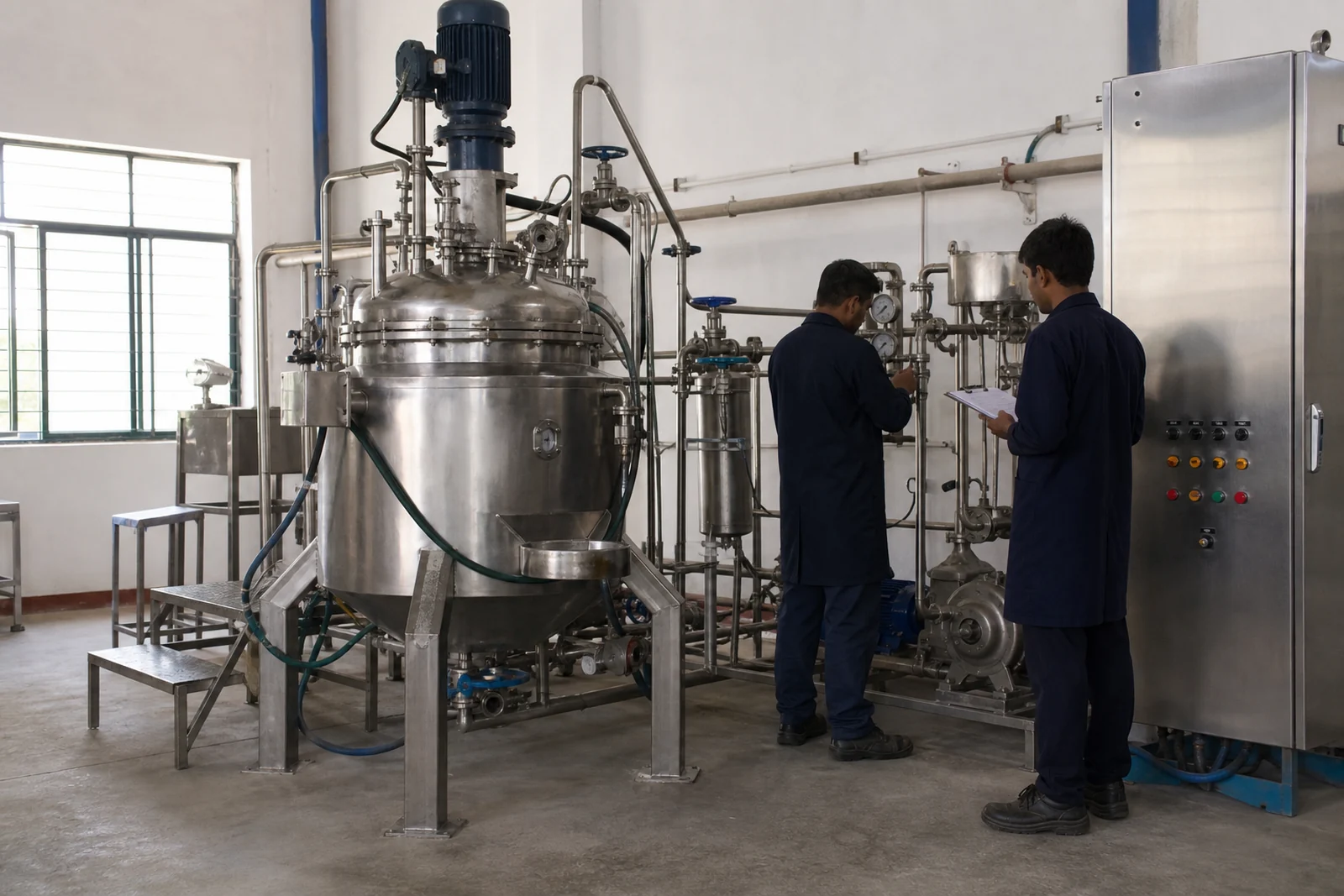
Setting up a lubricant blending or grease manufacturing plant requires more than buying equipment. The right reactor, temperature control, milling procedure, and plant layout determine whether you produce consistent in-spec product — or spend two years troubleshooting. We provide complete consultancy from concept through first commercial batch.
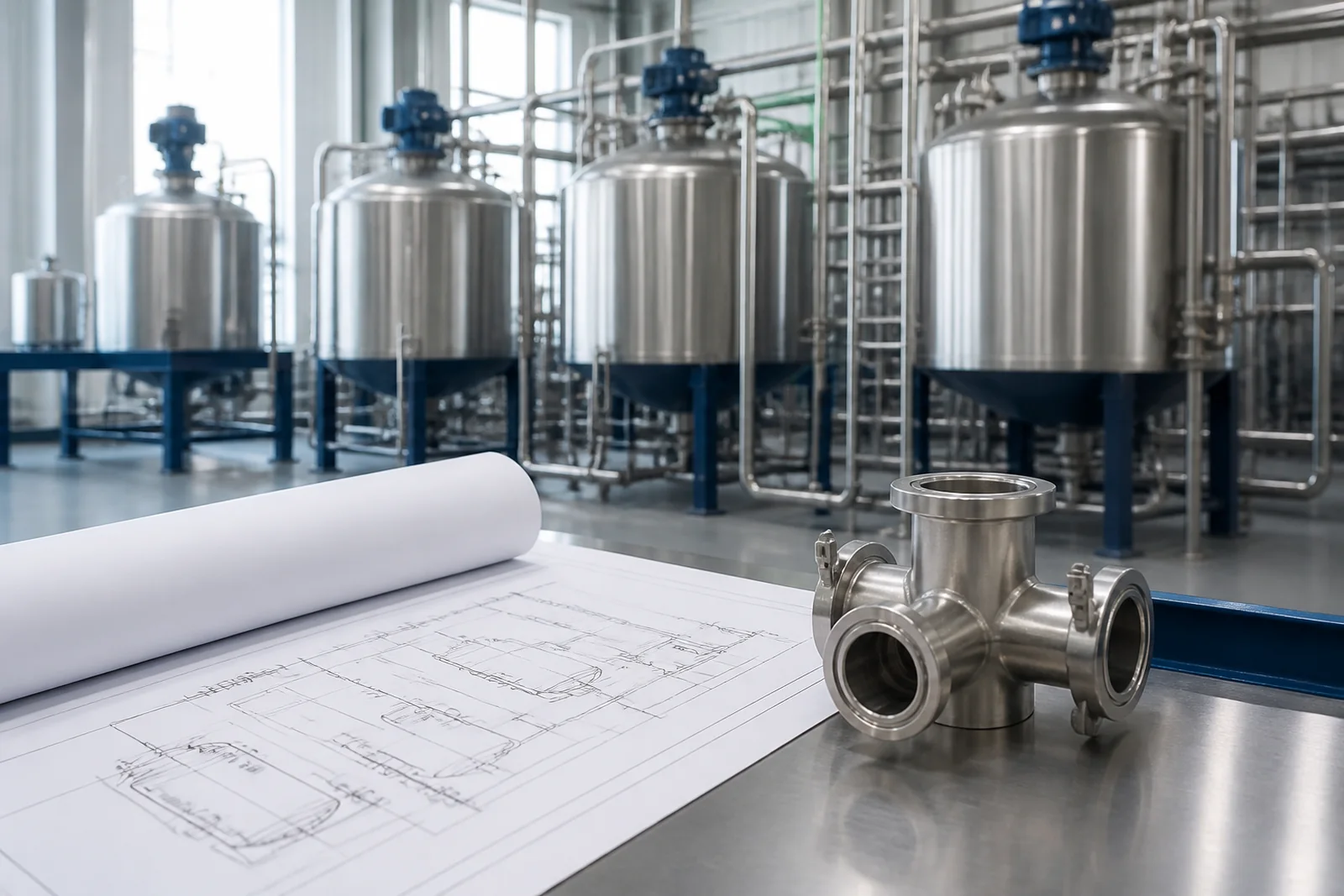
Service contextPlant geometry, utilities and process control are designed around the intended product range.
200–540
kg / Batch Range
60
Days to First Commercial Batch
P&ID
Full Design Included
On-site
First Batch Supervision
CommissioningReactor, utilities, controls and operating procedures are validated as one production system.
01Capacity and products
02Layout and utilities
03Commissioned process
What We Deliver
Complete Plant Setup Not Just Equipment Advice
Design & Engineering
Plant layout design — reactor positioning, safety spacing, material flow
P&ID (Piping & Instrumentation Diagram) — complete process flow
Saponification reactor specification — capacity, material (SS/MS), jacket type
Temperature controller selection and sizing (PID or manual)
Chiller and cooling system sizing — steam, thermal oil, or electric heating
Safety requirements — earthing, ventilation, fire suppression
Equipment & Procurement
Filtration and milling equipment selection — pre-mill, homogeniser, drum filter
Storage tank sizing and material specification
Weighing and metering equipment recommendation
Packaging line design — drum filling, tub packing, grease gun cartridge
Procurement support — vendor evaluation and quotation review
Maintenance schedule and spare parts list
Quality Lab Setup
Quality control laboratory equipment list — minimum viable lab
Recommended tests for in-house QC vs external NABL lab
Viscometer selection, flash point tester, penetrometer
QC protocols for every product made on the plant
NABL lab accreditation guidance if required
Sample retention and batch traceability procedures
Training & Commissioning
Staff training on saponification process and chemistry fundamentals
Safety protocols — handling of alkali, hot oil, fatty acids
First batch supervision — on-site or remote real-time guidance
Batch records template and production log design
Troubleshooting guide specific to your reactor and formula
Post-commissioning support — 30-day follow-up included
Plant Size Selection
Standard Grease Plant Configurations
200
kg / batch
Monthly Output
~20–25 tonnes
Reactor Type
Jacketed SS 300L
Heating
Electric or steam
Best For
New entrant, specialty greases
Capex Range
₹40–60 lakh (~US$47,000–71,000)
350
kg / batch
Monthly Output
~35–45 tonnes
Reactor Type
Jacketed SS/MS 500L
Heating
Thermal oil or steam
Best For
Regional manufacturer, 2–3 grade range
Capex Range
₹70–100 lakh (~US$83,000–118,000)
420
kg / batch
Monthly Output
~50–65 tonnes
Reactor Type
Jacketed MS 600L
Heating
Thermal oil
Best For
Established manufacturer expanding
Capex Range
₹1–1.4 crore (~US$118,000–165,000)
540
kg / batch
Monthly Output
~70–90 tonnes
Reactor Type
Jacketed MS 800L
Heating
Thermal oil
Best For
Industrial supplier, wide grade range
Capex Range
₹1.5–2 crore (~US$177,000–236,000)
Capex ranges are estimates based on cost-competitive equipment sourcing (India benchmark) as of 2024. Final costs depend on equipment specification, site preparation, and location — our grease plant setup cost guide breaks these down line by line. We assist with vendor quotation and evaluation.
How It Works
From Empty Site to Running Production
1
Feasibility & Scope Assessment
We begin by understanding your business case: which grease types you plan to produce, target monthly output, sales channels (B2B industrial, retail, OEM), available site area, power supply, and capital budget. From this we recommend the appropriate plant configuration and provide a realistic capex estimate.
2
Plant Design & Equipment Specification
We prepare the plant layout drawing, P&ID, and complete equipment specification list. Each piece of equipment is specified with dimensions, material, capacity, and recommended vendors or procurement sources. The specification is detailed enough to send directly to fabricators for quotation.
3
Procurement Support
We review vendor quotations and advise on selection. For the saponification reactor — the most critical equipment — we provide specific evaluation criteria and will review the fabricator's design before production. We also advise on which components can be locally fabricated and which require specialist supply.
4
Installation Oversight & Lab Setup
During installation, we advise on reactor positioning, piping connections, and instrumentation setup. We design and help equip the quality control laboratory with the minimum viable equipment for production QC — see our lubricant QC lab setup guide. This includes viscometer, flash point tester, penetrometer, dropping point apparatus, and analytical balance, with batch validation following our ASTM lubricant & grease testing protocols.
5
Staff Training & First Batch Commissioning
We train your production team on the chemistry and safety of the saponification process before the first batch. The first commercial batch is supervised directly — either on-site or via real-time video call. We are present through every critical temperature stage and take responsibility for resolving any issue that arises during the first production run.
A Surat-based chemicals distributor decided to enter grease manufacturing to capture vertical margin on products they were already selling. They had the site and capital but no manufacturing experience, no equipment, and no formulations. We were engaged for the complete project from day one.
We designed the plant layout around their 2,000 sq ft facility, specified a 350 kg jacketed stainless reactor with thermal oil heating, a drum filter, and a three-roll mill. We sourced Indian fabricators, reviewed the reactor design, and supervised installation. In parallel, we developed formulations for calcium soap NLGI 2 and lithium soap NLGI 2 — their two initial products — and designed the QC lab around a viscometer and penetrometer.
Time to First Batch
58 days from project start
First Saleable Grade
Calcium soap NLGI 2 — batch 3
Products Commissioned
Calcium NLGI 2, Lithium NLGI 2
QC Lab
Fully equipped and operational at launch
Questions & Answers
Frequently Asked About Plant Setup
Can you help set up a lubricant blending plant (not just grease)?
Yes. Lubricant oil blending plants are simpler than grease plants — no saponification reactor required. A blending plant consists of base oil storage tanks, additive drums, a heated blending vessel, filtration, and packaging. We can design a complete lubricant oil formulation-ready blending plant from 5,000 litres/day capacity upward, including tank farm design, mixing vessel specification matched to your lube blending plant capacity target, and a drum filling line setup for packaging.
Do you help with factory compliance requirements — fire NOC, factory licence, PCB approval?
We advise on the technical requirements that inform regulatory compliance — fire safety distances, solvent storage limits, effluent handling — but we do not handle the regulatory application process itself.
We can connect you with consultants who specialise in factory licensing and PCB compliance in your state. We do provide all technical documentation that a fire NOC or factory licence inspector would require about the manufacturing process.
We already have a reactor. Can you just help with the formulations and process?
Yes — we can scope the engagement to match your needs. If you have the equipment but need formulations and SOPs, that is our Grease Formulation service. If you have equipment and formulations but your batches are inconsistent, that is our Process Optimisation service. For ongoing grade development we offer lubricant product development R&D and a continuous annual R&D partnership. Plant setup is the full-scope option for new entrants.
Can you do the first batch supervision remotely, or does it have to be on-site?
Both options work well. Remote supervision is done via video call — your operator describes or shows the reactor state at each critical stage and we advise in real time. Most temperature control decisions can be made remotely if your team has clear instruments and a consistent communication channel. For complex thickener chemistries (lithium complex, calcium complex) or when clients prefer, on-site supervision is available worldwide — across India, the Middle East, Africa, Asia, Europe and beyond.
What is the minimum viable setup to start producing calcium grease?
Calcium soap grease is the most forgiving to produce and requires the simplest equipment. The minimum viable setup: a 200 kg jacketed reactor (electric or steam heated), a drum filter or bag filter, a basic hand-operated filling station, and a penetrometer for QC.
Total equipment cost for a minimal 200 kg setup sourced from cost-competitive fabricators can be as low as ₹25–35 lakh (~US$29,500–41,300) — excluding site preparation and electrical work. The production SOP we provide is calibrated to make consistent calcium grease on even the simplest reactor.
Tell us about your planned products, target output, site size, and capital budget. We will give you an honest assessment of what is achievable and at what cost.
We use necessary cookies to send an enquiry. Analytics records pages and company-level network data, and may load Apollo visitor tracking, until you choose Necessary only. Enquiry replies do not require analytics. Privacy policy
WhatsApp us
Allow ChatGPT ad measurement?
With your permission, the OpenAI Pixel measures enquiries from our ChatGPT ads and may match them using securely hashed contact information. Your enquiry works with either choice. OpenAI conversion terms.
Mira · live
Brief this project
No search needed — leave a short note and the formulator picks it up.