Technical assurance 02
Lubricant Plant and Quality System Audits
See where quality can drift—from raw-material receipt to batch release—and leave with a practical corrective-action plan.

Why this service
An audit that follows the product, not just the paperwork
A lubricant plant can have good equipment and still lose control through unclear responsibilities, inconsistent additions, weak traceability or laboratory checks that do not match the real risks. Our audit follows material and information through the complete manufacturing route.
The result is a plain-language view of what is working, what could affect quality and what should be corrected first. Findings are linked to observable evidence rather than generic consultancy recommendations.
Visible priorities
Separate immediate quality risks from longer-term improvement opportunities.
Clear ownership
Each agreed action has a practical next step, responsible owner and review point.
Better repeatability
Focus attention on the controls that help different shifts and operators produce consistent output.
Service lens
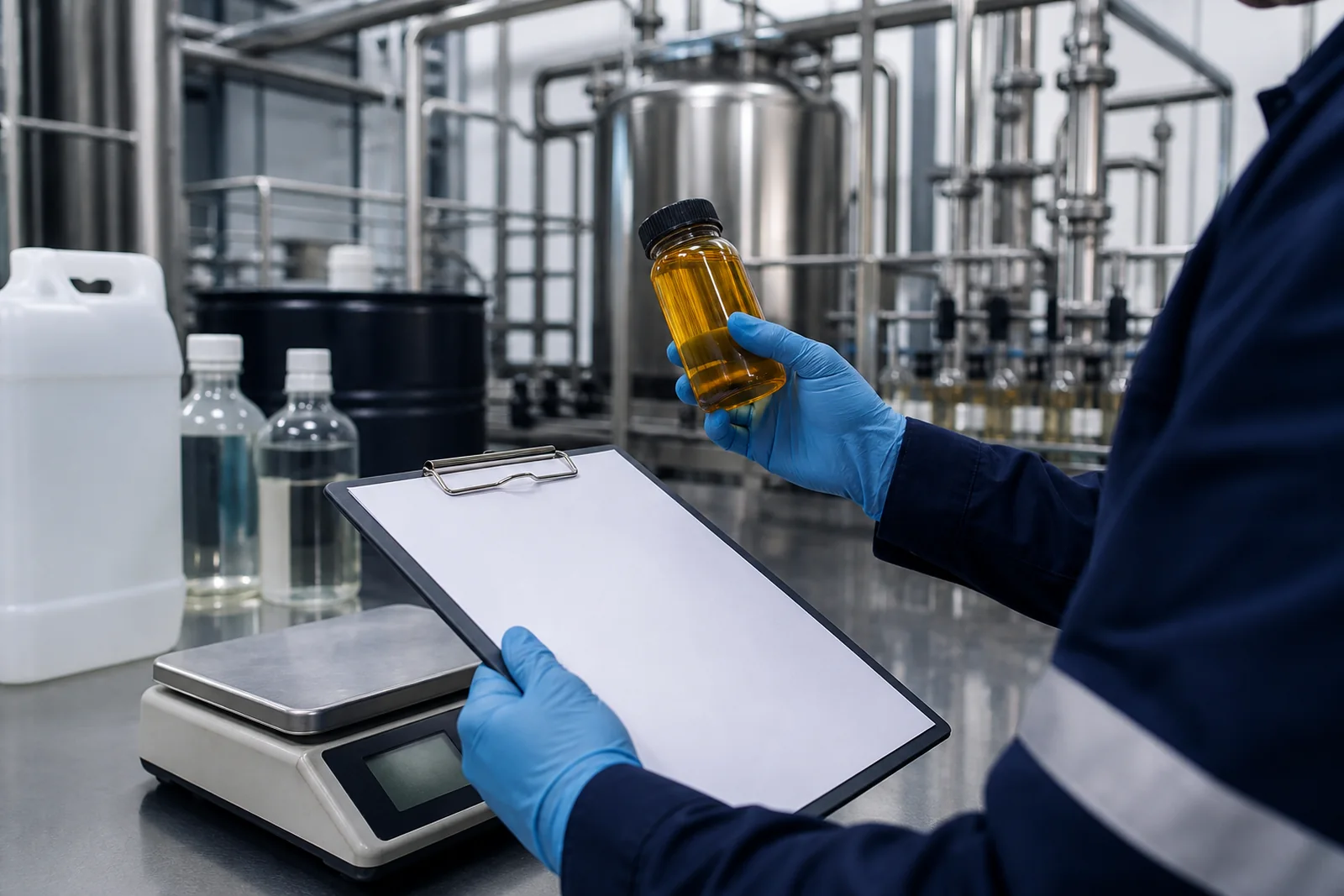
Follow the product through the control system
Sampling, weighing, records and process conditions are reviewed together so findings connect to an actionable control point.
- 01Process evidence
- 02Quality-system check
- 03Prioritised action
Who it is for
Built around your operation and your team
The scope is adjusted to the site, business question and people who will use the result.
- Lubricant blending plants
- Grease manufacturers
- Private-label and toll blenders
- Additive and specialty-fluid producers
- Investors and technical buyers
- Plants preparing for customer audits
What you receive
Useful outputs, not a presentation that disappears
Every engagement is scoped around a decision, improvement or working system your team can continue using.
Audit scope and checklist
A tailored review covering the agreed products, lines, laboratory and business risks.
Plant walkthrough
Observation of storage, transfers, blending, sampling, testing, filling, release and record control.
Finding register
Each finding states the evidence, possible impact and recommended priority without inflated scoring.
Corrective-action plan
A practical plan for procedures, training, equipment, verification and follow-up.
How the engagement works
A clear route from brief to action
The order matters: first agree the question, then collect the right evidence, and only then recommend action.
- 1
Set the purpose
Agree whether the audit is for quality improvement, supplier approval, due diligence or complaint prevention.
- 2
Review records
Examine selected SOPs, batch sheets, test records, complaints and material traceability before the visit.
- 3
Follow the plant flow
Trace real material movement and decision points with the responsible team.
- 4
Test the controls
Check whether written procedures, actual practice and available evidence agree.
- 5
Close and improve
Discuss findings, issue the report and optionally verify completed corrective actions.
Ways to engage
Start focused. Expand only when it adds value.
Final scope, timing and fees are confirmed after a short requirement review.
One problem or process area
Focused audit
- Defined line, product or complaint
- Short evidence review
- Focused corrective actions
End-to-end assurance
Full plant quality audit
- Manufacturing and QC walkthrough
- Traceability and document review
- Prioritised audit report
Buyers and private-label brands
Supplier assurance
- Capability and control review
- Sample and record verification
- Follow-up closure check
Before we begin
Information that helps us scope the work
- Plant layout and process flow
- Product families and production volumes
- Selected SOPs and batch records
- Recent rejects, complaints or changes
- Audit purpose and confidentiality needs
Reference-led practice
Standards, research and industry evidence behind the scope
These sources inform the service design. Linked patents are technical references, not a claim that Lubechem owns or uses the patented invention.
Common questions
What clients usually ask first
Can the audit be remote?
Document and record reviews can be remote. A plant walkthrough is recommended when the main questions involve actual handling, sampling, equipment or operator practice.
Will you share our information with suppliers or customers?
No. The engagement can be covered by an NDA and the report is issued only to the agreed client contacts.
Can you help close the findings?
Yes. Follow-up can include SOP revision, training, process trials or a closure-verification visit.
Start with the real requirement
Tell us what needs to improve, be verified or be built.
Share the site, team, product or equipment involved and the decision you need to make. We will recommend a sensible first scope.
Start a technical discussion