Home / Metalworking fluids / Semi-Synthetic Cutting Oil Formulation
CNC machining · Microemulsion
Semi-Synthetic Cutting Oil Formulation
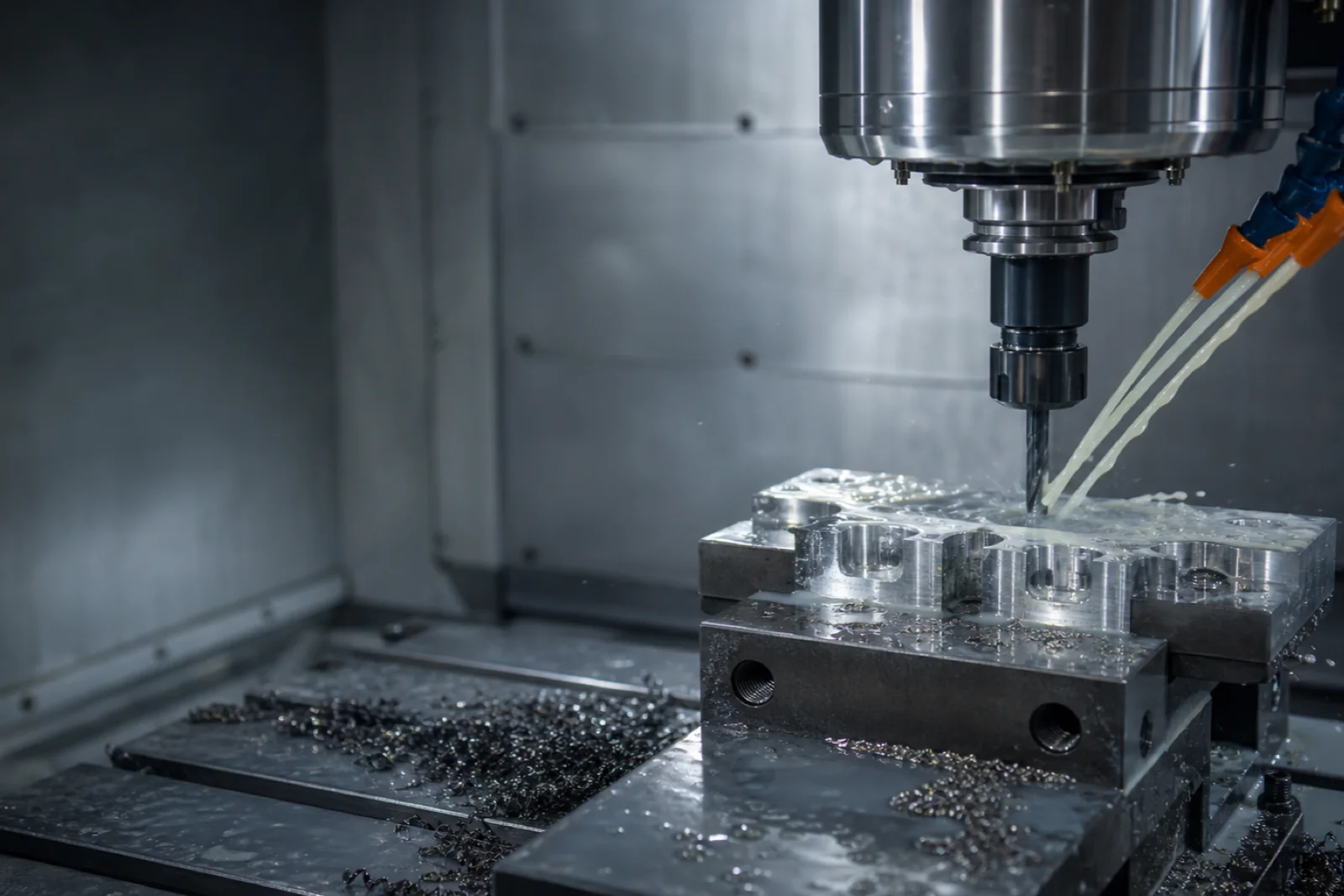
Semi-synthetic cutting fluids combine a smaller oil phase with water-soluble performance chemistry. The formulation must support the actual cut while keeping the circulating system clean and stable.
ApplicationMixed CNC cutting
Fluid systemLow-oil microemulsion
Failure to preventTool wear, foam or sticky deposits
Proof routeCutting and sump trial
Who this is for
Start with the machine and the customer’s water.
For manufacturers targeting CNC turning, milling, drilling or tapping across a defined mix of metals. This page focuses on cutting performance and machine conditions; the broader semi-synthetic page covers the fluid family across machining and grinding.
A useful brief includes the machining operation, alloys, tool and coolant delivery, make-up water, intended dilution, filtration, current product or sample, and the failure that must improve. Those inputs define the screening plan before ingredients are selected.
Controlled foam in high-flow coolant delivery
Stable dilution and manageable machine deposits
Chemistry decisions
Design the microemulsion around the cut
The emulsifier system disperses the limited oil phase and helps the concentrate dilute consistently. Its selection has to preserve lubricity without creating an avoidable foam or residue problem.
Machining duty
Map the most severe cut, tool coating, delivery pressure and acceptable finish before choosing the oil and lubricity system.
Emulsifier balance
Select surfactant and coupling functions around the chosen oil phase, dilution water and concentrate stability.
Metal protection
Screen ferrous rust, aluminium stain and copper-alloy compatibility under the intended working concentration.
Field control
Define product-specific concentration measurement, make-up practice, contamination checks and trial stop criteria.
Fluid-family boundary: A translucent appearance is not the specification. We release against machining response, diluted-fluid stability, deposits, foam and alloy safety. The broader semi-synthetic metalworking-fluid guide explains the family; this page addresses cutting-oil development for a stated CNC duty.
Complete formulation
Balance the whole fluid, not one ingredient.
Oil phase matched to operation severity
Microemulsion surfactant and coupling system
Water-soluble lubricity and corrosion control
Low-foam preservation and contamination tolerance
Project handover: A scoped engagement can provide a client-owned formulation, raw-material list, manufacturing method, QC limits and trial plan. Exact ingredients, proportions and blend order are determined and released only after compatibility, safety and performance review.
Qualification sequence
Prove concentrate, dilution and cutting performance.
Candidates advance from bench screening to a controlled machine trial only when the relevant failure risks have measurable acceptance criteria. The final limits belong to the customer’s materials and process.
- Concentrate storage and dilution stability
- Hard-water and chloride challenge with actual make-up water
- Dynamic foam, air release, filtration and dried-residue checks
- Alloy stain and ferrous corrosion screens
- Machining finish, tool-wear baseline and monitored sump trial
When a trial fails
Separate formula, water and machine effects.
Poor tool life → verify delivery and boundary lubricity at the cut
Sticky residue → inspect surfactants, evaporation and water salts
Foam → inspect return geometry and dynamic surfactancy
Aluminium stain → review alloy, pH and inhibitor package
For a failed field trial, retain a clean concentrate, fresh dilution, sump sample and make-up-water sample. Record concentration, age and machine conditions before changing the package.
Common selection questions
Answers before a development brief.
Does semi-synthetic always mean less oil than soluble oil?
It generally uses a lower oil fraction, but the useful classification and performance depend on the complete concentrate and the job. We avoid choosing by appearance alone.
Which emulsifier should a semi-synthetic cutting oil use?
There is no universal choice. The oil phase, hard-water range, foam limits and corrosion package determine the required surfactant balance.
Can one fluid serve steel and aluminium machining?
Possibly, after checking actual alloy staining, ferrous corrosion, tool life and finish at the intended concentration.
General category and safe-use background: OSHA metalworking-fluids manual and HSE metalworking-fluid guidance. These references do not certify any proposed formulation.
Published industry references
Use supplier guidance to sharpen the test brief.
The sources below are examples from established fluid and additive suppliers, reviewed on 30 September 2026. They inform questions and test design; their product claims and limits are not results for a Lubechem formulation.
Semi-synthetic technical data sheet
Its published example names specific machining operations, alloy families and a water-quality window rather than describing semi-synthetic fluid as universally suitable.
Our check: Define our client’s own alloy and water envelope before a machine trial.
ECOCOOL microemulsion example
FUCHS lists emulsion stability, foam, filterability, drag-out and hard-water deposits as distinct properties of a machining microemulsion.
Our check: Add filtration, carry-off and deposit checks to cutting performance tests.
Handling and care guide
The guide ties water quality, concentration, pH, top-off and tramp-oil removal to fluid condition in service.
Our check: Deliver a product-specific monitoring and make-up procedure with the formulation.
Related technical pages