Reviewed by Er. Manoj Kumar — Founder & Chief Formulator · 15+ years lubricant & grease R&D
Semi-synthetics occupy the difficult middle ground between oil-rich emulsions and oil-free synthetics. The useful design point depends on machining severity, filtration and desired cleanliness.
OperationMixed machining and grinding
Fluid familyLow-oil microemulsion
Failure riskFoam, sticky residue, short sump life
Proof methodWater matrix, recirculation, field ageing
Formulation target
Define the operating window before selecting chemistry.
The development brief records operation severity, workpiece and tool materials, machine delivery, water or carrier constraints, filtration, downstream processing and the failure that the new product must prevent.
01
Useful lubricity at lower oil content
Converted into a measurable screening or field-trial gate.
02
Clean machine surfaces and good settling
Converted into a measurable screening or field-trial gate.
03
Stable performance as water salts accumulate
Converted into a measurable screening or field-trial gate.
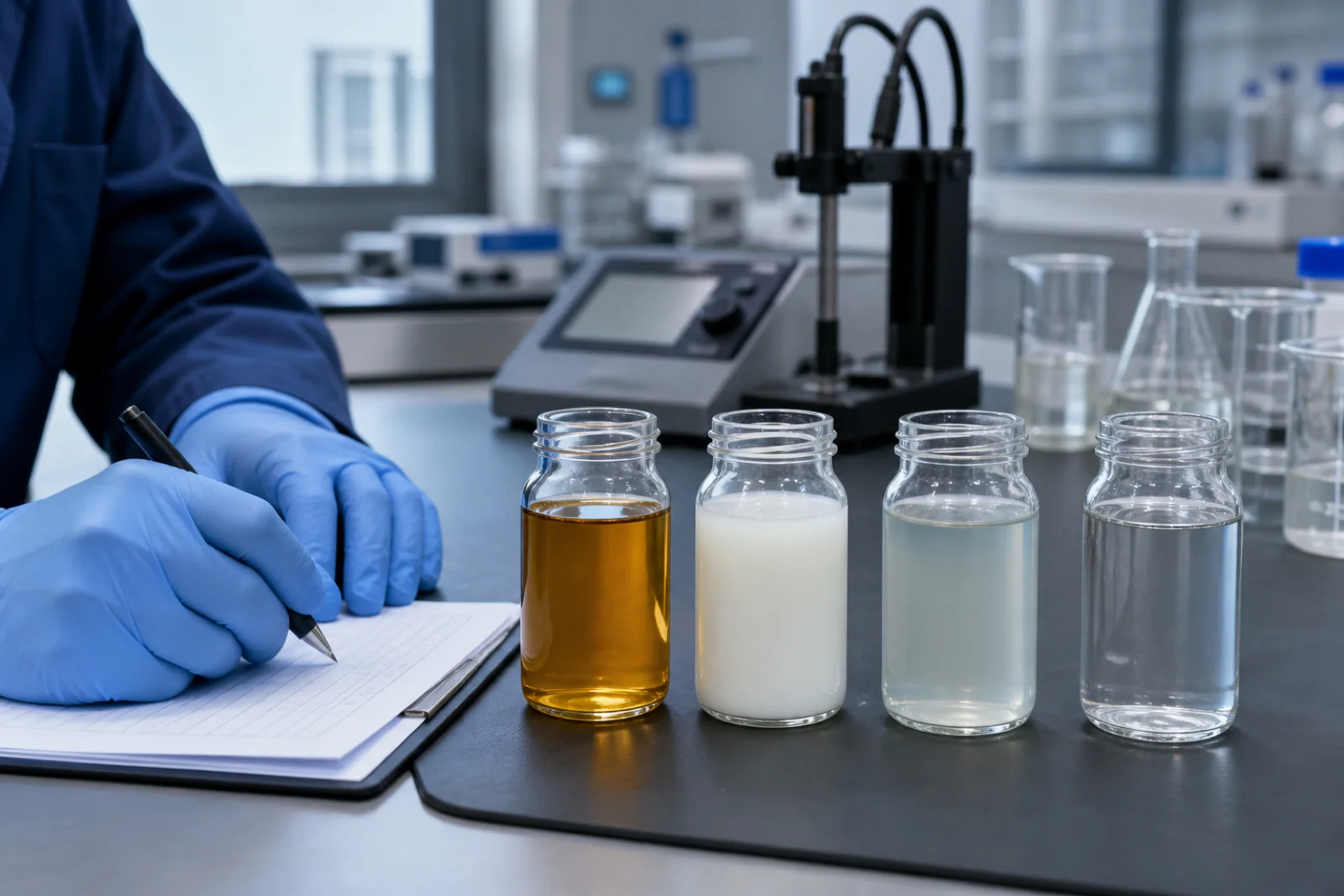
Fluid-family choice is a design decision. Appearance alone does not establish lubricity, stability or alloy safety.
Formulation architecture
Build a balanced system, then challenge its weak points.
Raw-material choices are made against the brief, regulatory constraints and available supply routes. Exact components and treat rates remain part of the client-owned development package.
Fluid foundation
Controlled oil phase with microemulsion surfactants
Performance system
Synthetic lubricity and wetting support
Compatibility control
Hard-water tolerant corrosion package
Stability support
Low-foam coupling and preservation system
Responsible boundary: this page describes selection logic and evidence gates, not a production recipe. Final composition depends on the client’s raw materials, equipment, safety review, compliance duties and validated trial results.
Qualification gates
Connect each test to a release decision.
A useful programme begins with a baseline, identifies technical risks, screens candidates with appropriate methods and ends with a controlled field trial.
Concentrate and dilution cold/heat stability
Hard-water soap and residue screen
Recirculation foam and air release
Machining finish plus grinding cleanliness
Extended sump and contamination challenge
Failure map
Diagnose product, process and contamination together.
Sticky deposits → review surfactant load and water evaporation
Foam → reduce dynamic surfactancy and inspect system design
Poor finish → revisit lubricity and delivery at the cut
Short life → identify contamination before adding preservative
Development handover
What the engagement can produce.
01
Technical brief & risk matrix
Target duties, materials, constraints, acceptance criteria and test plan.
02
Qualified formulation package
Client-owned formula, BOM, manufacturing method and in-process controls.
03
QC specification
Raw-material checks, finished-product limits, sampling and release records.
04
Trial & operating guide
Commissioning, monitoring, corrective actions and change-control notes.
05
Safety and compliance inputs
Data needed for the client’s SDS, label, exposure and market review.
06
Supplier alternatives
Functionally qualified options where substitution risk can be controlled.
Related technical pages
Continue through the metalworking-fluid development system.
With your permission, we use Google Analytics and Google Ads cookies to understand site visits and measure enquiries from our ads. Your enquiry form and WhatsApp work with either choice. Privacy policy