Responsible operations 08
Lubricant EPR, EHS and Sustainability Support
Connect lubricant operations, records and responsibilities so environmental commitments can be demonstrated with evidence.

Why this service
Turn compliance obligations into working plant routines
A portal submission cannot compensate for missing source records, unclear ownership or weak site controls. We help lubricant businesses organize the operational information behind used-oil EPR, chemical handling, storage, spill response and environmental management.
The engagement is practical and evidence-led. It identifies what the client can address internally and where a legal, statutory, accredited or specialist environmental professional must be involved.
Better records
Link procurement, production, sales, waste and recycler documents to responsible owners.
Safer operating controls
Review storage, containment, identification, transfer and spill-response practice.
Clear specialist boundaries
Identify where filings, consents, monitoring or verification require an authorized professional.
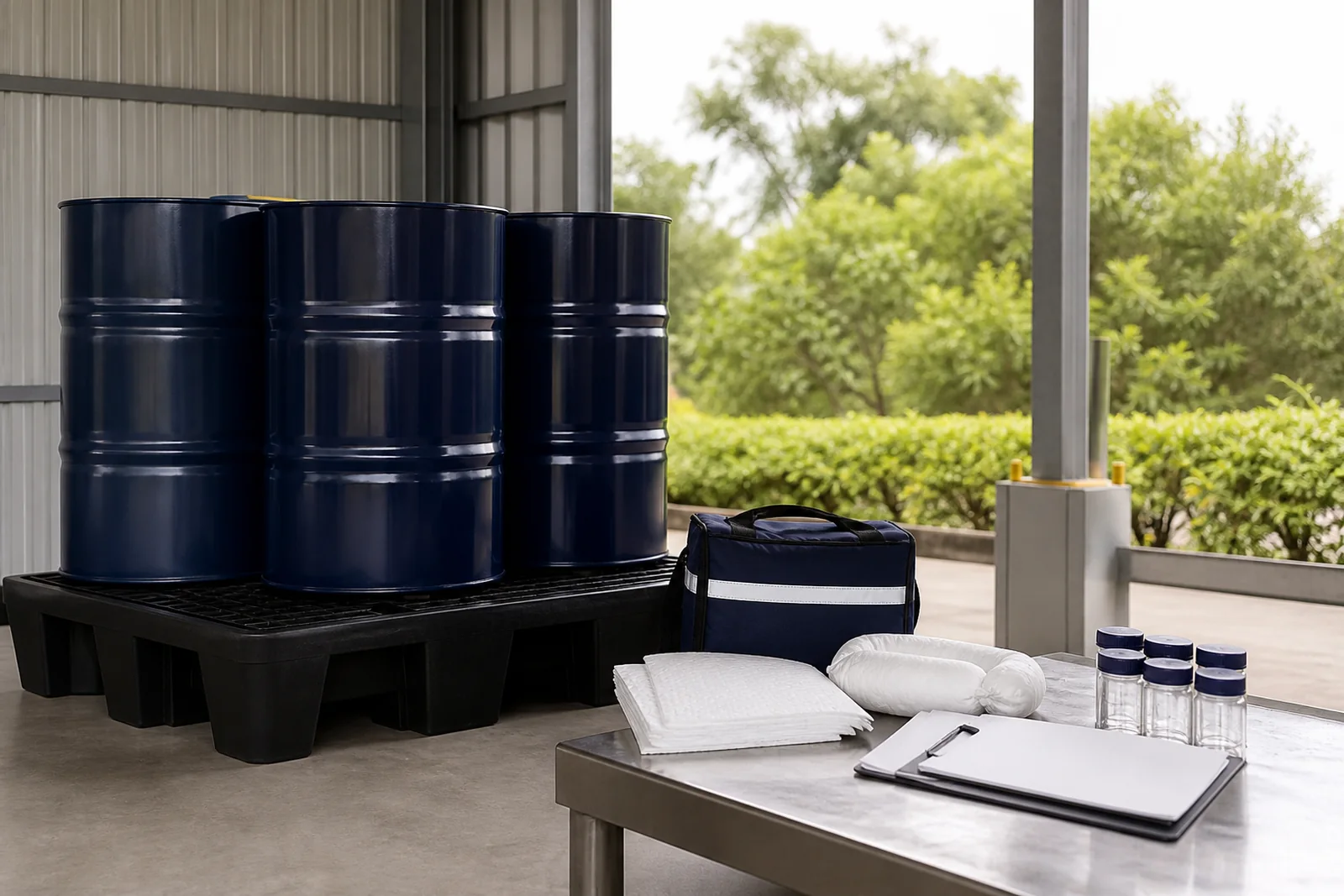
Service lens
Turn obligations into operating controls
Storage, spill readiness, records and used-oil responsibilities are connected to the people who maintain them.
- 01Applicable duty
- 02Working evidence
- 03Owned action
Who it is for
Built around your operation and your team
The scope is adjusted to the site, business question and people who will use the result.
- Lubricant and base-oil producers
- Importers and private-label brands
- Grease and specialty-fluid plants
- Used-oil bulk generators
- New lubricant businesses
- Plants preparing environmental systems
What you receive
Useful outputs, not a presentation that disappears
Every engagement is scoped around a decision, improvement or working system your team can continue using.
Obligation and data map
Business activities, available records, responsible roles and current evidence gaps.
Used-oil EPR readiness review
Registration data, product and sales records, certificate workflow and review calendar.
Plant EHS walkthrough
Selected storage, bunding, transfer, identification, housekeeping and response controls.
Improvement register
Prioritized actions with owners, evidence needed and external-specialist referrals.
How the engagement works
A clear route from brief to action
The order matters: first agree the question, then collect the right evidence, and only then recommend action.
- 1
Define the business role
Confirm whether the entity manufactures, imports, sells, generates, collects or processes relevant oil streams.
- 2
Map records and movement
Trace material and reporting information through the organization.
- 3
Review site controls
Observe selected storage, handling, spill and waste-management practices.
- 4
Separate advice from authorization
Flag activities that require formal filings, statutory consent or accredited verification.
- 5
Build the review cycle
Create a practical action and evidence calendar for responsible staff.
Ways to engage
Start focused. Expand only when it adds value.
Final scope, timing and fees are confirmed after a short requirement review.
Producers and importers
Used-oil EPR readiness
- Entity and data review
- Document-gap register
- Submission-readiness checklist
Manufacturing and storage sites
Plant EHS review
- Storage and handling walkthrough
- Spill and waste controls
- Prioritised action plan
Ongoing improvement
Environmental system support
- Responsibility and record system
- Internal review support
- Periodic readiness checks
Before we begin
Information that helps us scope the work
- Company activities and registrations
- Product, purchase and sales records
- Waste and recycler documents
- Site layout and storage areas
- Existing environmental procedures
Reference-led practice
Standards, research and industry evidence behind the scope
These sources inform the service design. Linked patents are technical references, not a claim that Lubechem owns or uses the patented invention.
Common questions
What clients usually ask first
Can you complete our EPR portal registration?
We can organize technical data and documentation readiness. Formal declarations and submissions remain with the responsible company and its authorized signatory or appointed professional.
Do you issue ISO 14001 certificates?
No. We can support implementation and internal readiness. Certification is performed independently by a recognized certification body.
Can this include a used-oil storage review?
Yes. The walkthrough can cover identification, closed storage, containment, access, housekeeping, records and escalation needs.
Start with the real requirement
Tell us what needs to improve, be verified or be built.
Share the site, team, product or equipment involved and the decision you need to make. We will recommend a sensible first scope.
Start a technical discussion