Solvent extraction & deasphalting
Study selective solubility to separate an oil-rich fraction from less-soluble heavy material and contaminants. Solvent selection changes both separation and oil loss.
R&D support for used and waste engine oil recycling: investigate chemical separation, solvent extraction and re-refining feasibility through measured laboratory evaluation.
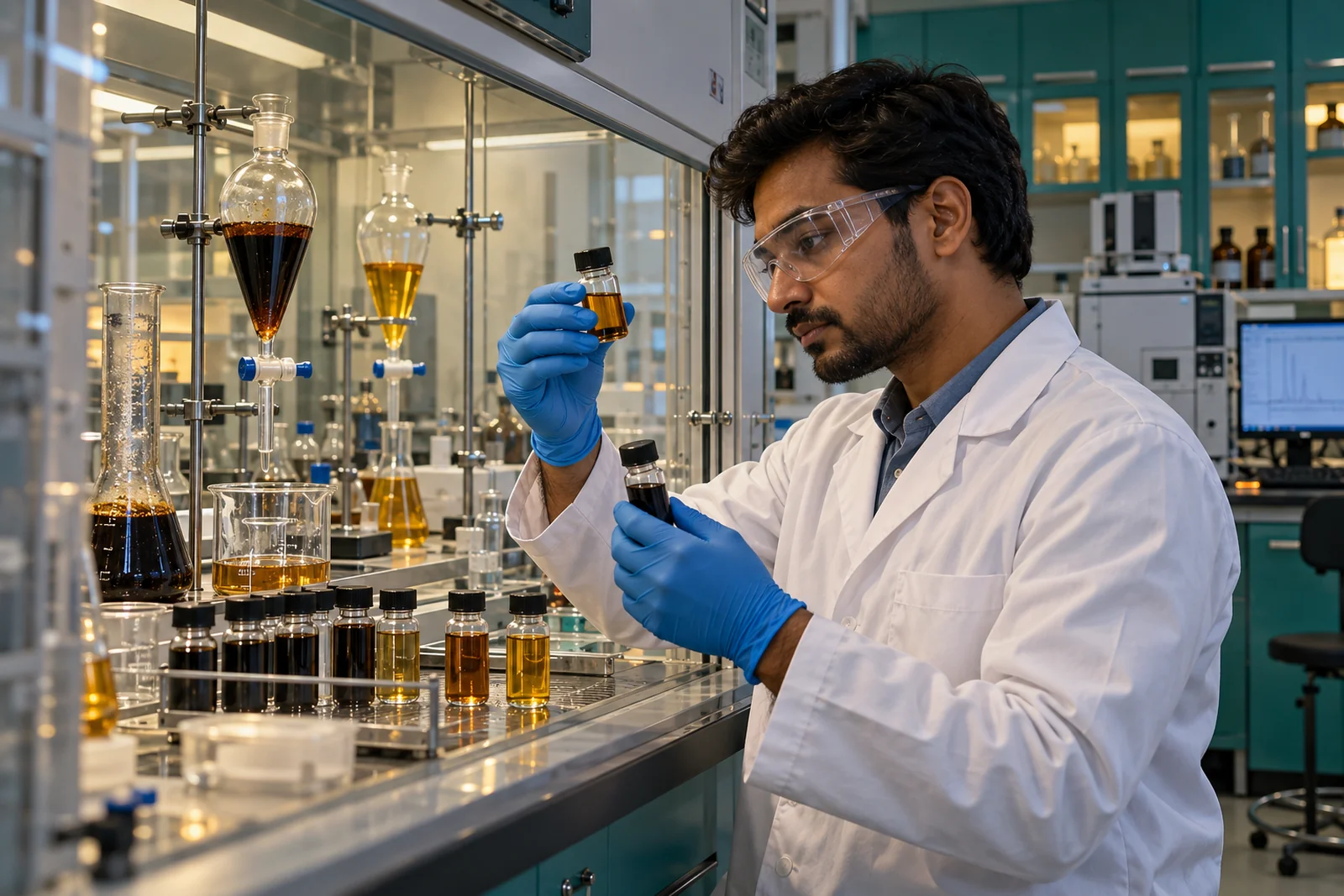
Chemical treatment of used engine oil investigates how selected contaminants can be separated from an oil-rich fraction. Solvent deasphalting is one separation approach. Re-refining is a wider processing and quality-validation route. The research question determines which stages belong in a study.
| Approach | Research focus | Evidence still needed |
|---|---|---|
| Chemical treatment | Compare contaminant separation through extraction, flocculation or adsorption. | Analytical change against the untreated oil, recovery and treatment residues. |
| Solvent deasphalting | Separate less-soluble heavy material from an oil-rich phase using selective solubility. | Oil lost with the residue, residual solvent and the composition of both fractions. |
| Re-refining | Assess the processing and finishing needed for a candidate base-oil fraction. | Suitability for its intended use; finished engine oil also needs formulation and performance qualification. |
These are study distinctions, not guaranteed outcomes. EPA guidance on recycling and re-refined lubricants explains why recovered oil requires qualification for its intended use.
Used oil contains more than dirt. Water, soot, wear metals, degraded additives and oxidation products can change how a sample responds to treatment. Start with its composition and the intended recovered fraction.
Study selective solubility to separate an oil-rich fraction from less-soluble heavy material and contaminants. Solvent selection changes both separation and oil loss.
Evaluate whether selected treatment agents help dispersed contaminants form separable aggregates. Some feedstocks can form gels or persistent emulsions instead of settling cleanly.
Screen adsorbents for selected residual polar compounds or colour bodies after separation. Track useful oil retained by the media and the resulting spent solids.
Assess how chemical pretreatment could fit alongside solvent recovery and further finishing, such as distillation or hydrotreatment where appropriate. Define the test gates for a candidate base-oil fraction.
Research basis: hydrocarbon-solvent extraction and feedstock-dependent extraction–flocculation studies. Published observations guide screening; they are not results for your oil.
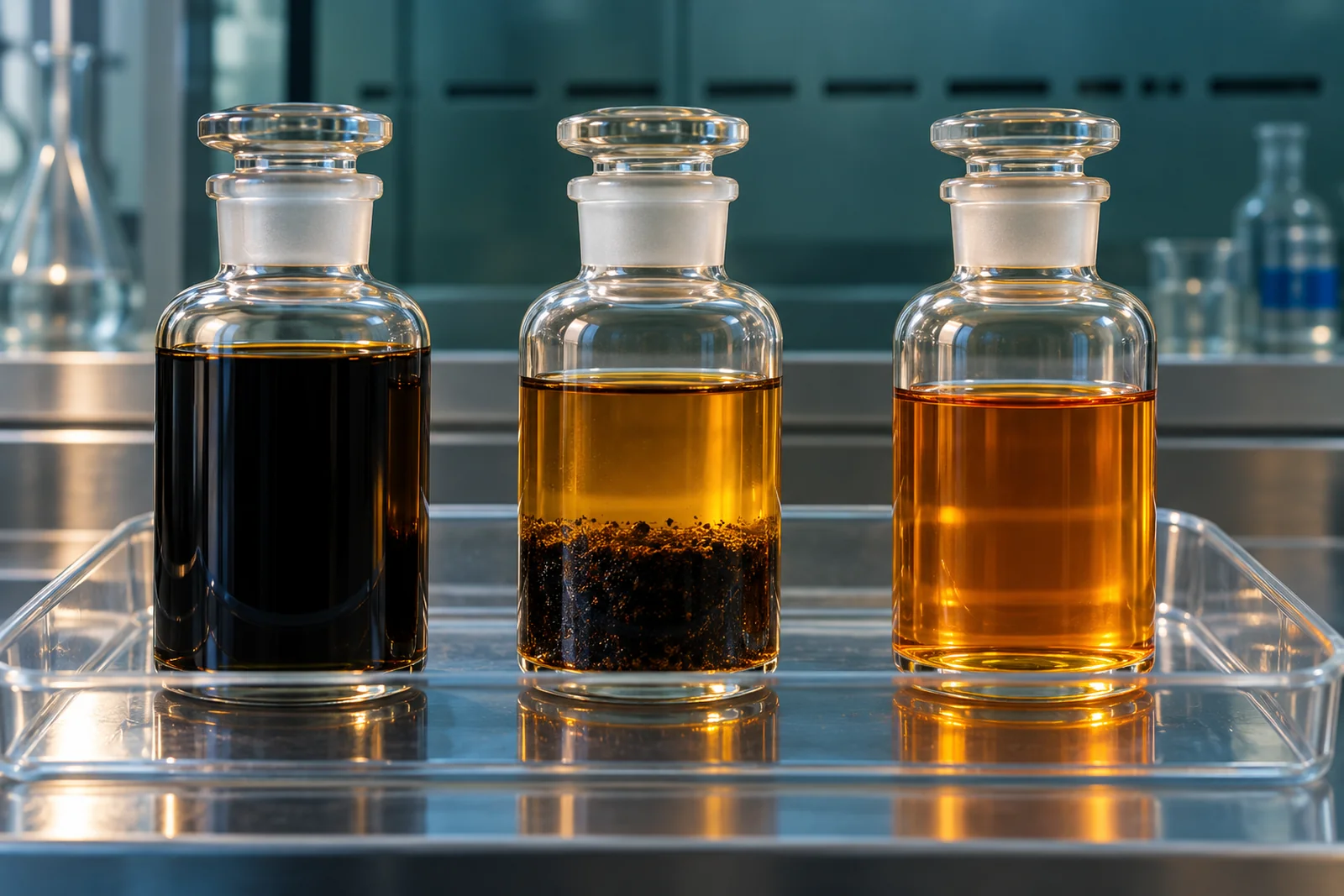
In used-oil research, “chemical deasphalting” commonly describes solvent-based separation of less-soluble heavy material from an oil-rich phase. It is a separation mechanism, not a promise that a chemical converts every waste oil into new engine oil.
The separated residue may contain oxidation products, soot, additive-derived material and oil carried out with the solids. Its composition needs analysis; it should not automatically be treated as pure asphalt.
Lower contamination, recovered oil quality and residual solvent are analytical questions. Appearance alone cannot answer them.
Published extraction–flocculation research reports different responses for oils with different properties. That is why the study begins with your sample.
A research sequence with clear evidence gates. Each stage informs whether the next stage is justified.
Identify the oil source, water, solids, viscosity and contamination profile.
Compare selected chemistry routes against an untreated reference sample.
Assess phase behaviour, settling, filtration and oil retained in the residue.
Evaluate solvent recovery, carry-over and the whole-study material balance.
Test the candidate fraction and document limitations and the next research step.
Bench results do not establish plant feasibility. A scale-up decision also needs solvent-cycle performance, residue management, equipment compatibility, energy assessment and applicable site approvals.
Agree the analytical plan before comparing treatment candidates. Use an untreated baseline, consistent preparation and repeat studies for the routes worth pursuing.
The exact methods and acceptance criteria depend on the feedstock and intended use. For test-plan support, explore laboratory testing & quality control.
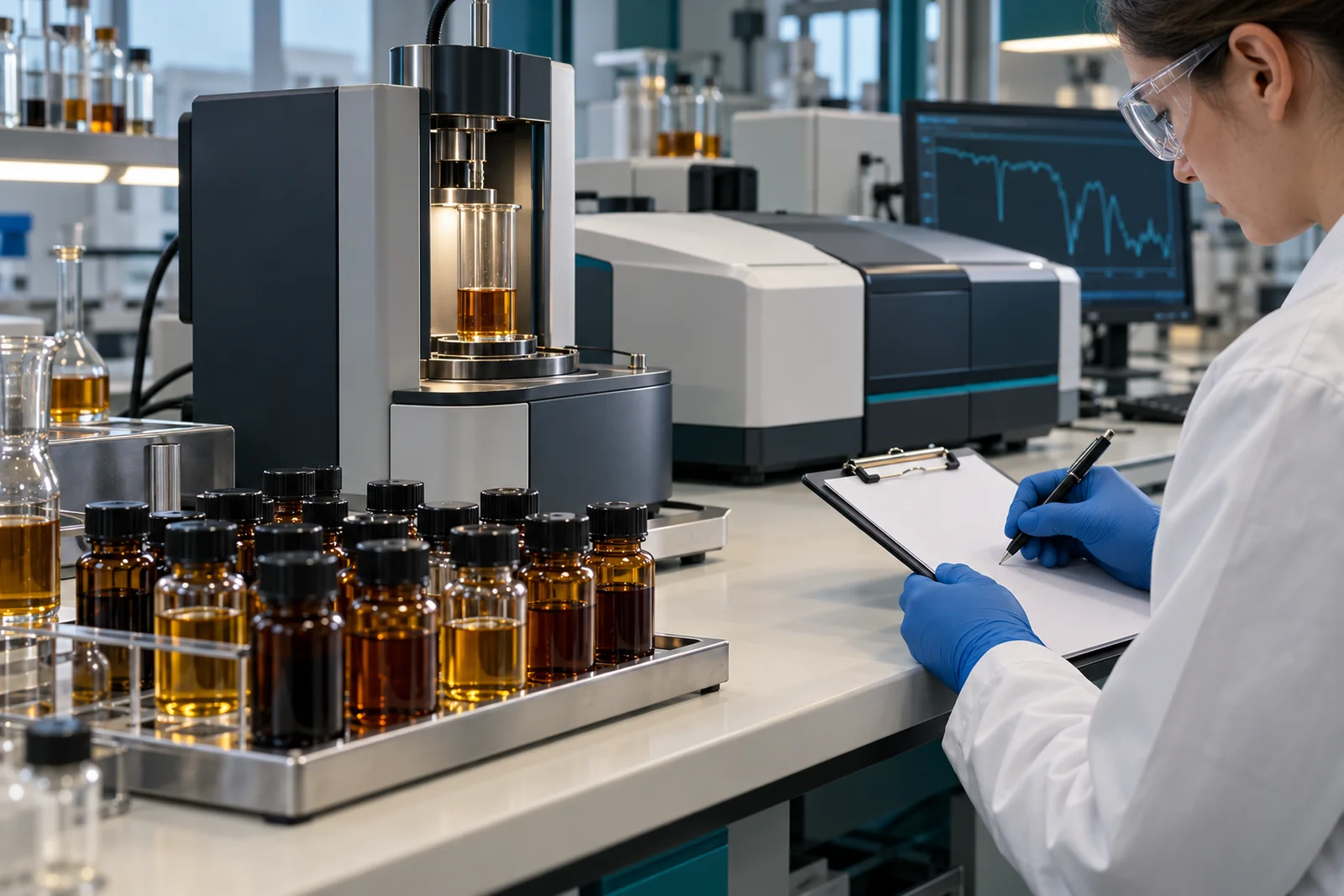
For researchers, technical teams and recyclers investigating chemical treatment of used engine oil. The agreed scope defines the study work and deliverables.
Research objective, sample requirements, chemistry shortlist, comparison matrix and acceptance criteria.
Observations, analytical comparisons and material balances for the candidates included in the study.
Route limitations, remaining tests and a recommendation to investigate further, revise the approach or stop.
This page concerns research and feasibility assessment. It does not offer a universal chemical recipe, certify recovered base oil, or guarantee yield, commercial throughput or finished engine-oil performance. Sample shipment and any lab work are arranged after the project scope is agreed.
Chemical-assisted separation, solvent extraction and adsorbent treatment are studied for removing selected contaminants from used lubricants. Their effectiveness depends on the oil composition and treatment route. Additional recovery, finishing and qualification may be needed.
No. Deasphalting is a separation stage. Complete re-refining aims to produce a suitable base-oil fraction through the required processing and validation. A finished engine lubricant also needs the right formulation and performance qualification.
There is no universal choice. Selectivity, emulsion or gel formation, oil losses, recovery behaviour, compatibility, cost and residue generation need comparison on representative feedstocks. Published solvent rankings should not be transferred directly to a new oil sample.
It is a historical treatment route that may be reviewed when comparing technologies. Corrosive chemistry and contaminated acid sludge make residue handling a central concern. A literature comparison is not a recommendation to adopt it.
A laboratory-treated fraction should not be assumed fit for engine service. EPA guidance explains that re-refined lubricants must satisfy refining, compounding and performance requirements. Removing colour or visible solids is not an engine-oil approval.
Share the oil source, service history, known contamination, available analysis, research goal and proposed study location. Start with a project description; sample acceptance and shipment instructions should be agreed before sending material.
Literature review compiled on 3 October 2026. These references explain mechanisms and study considerations; their findings are not performance claims for a Lubechem process. About Lubechem Consultant.
Used-oil contamination, recycling routes and the performance requirements for re-refined lubricants.
Hamad et al. / 2005Solvent extraction and demulsifier-assisted treatment; solvent recovery remains part of the feasibility question.
Pinheiro et al. / 2018Different waste lubricants can respond differently to the same separation route. Publisher abstract reviewed.
Altaee et al. / 2022A study of used power-station lubricant illustrating condition sensitivity; not validation of engine-oil feedstocks.
Tell us about your feedstock and the question you want the study to answer. We can discuss a suitable R&D scope and the evidence needed to evaluate it.
Email your research brief →R&D purposes only · Scope agreed before sample shipment