Capability development 01
Lubricant Training for Plant, QC and Maintenance Teams
Build practical skill where lubricant decisions are made: on the plant floor, in the QC lab and around operating equipment.
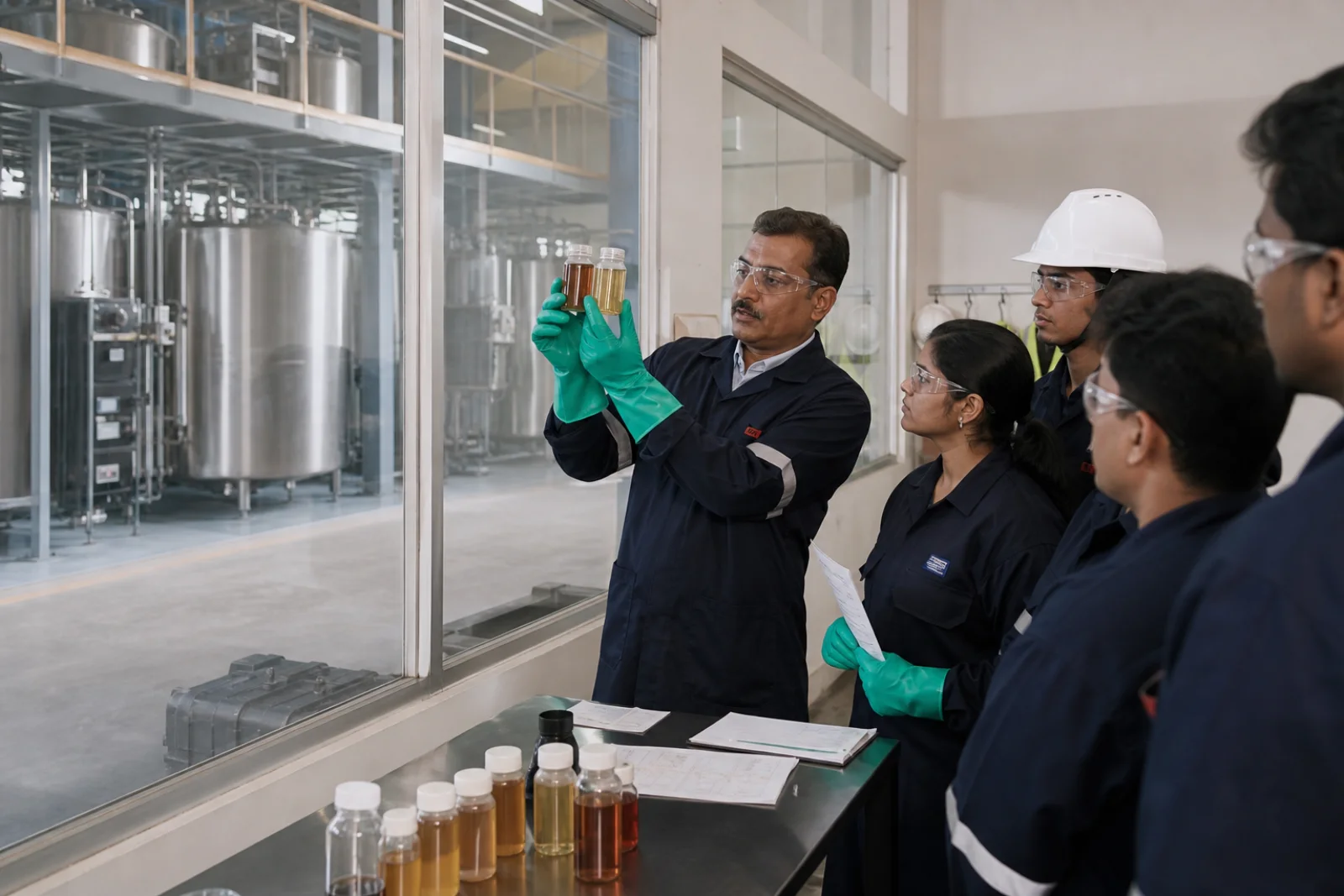
Why this service
Training shaped around the work your team actually performs
A generic presentation rarely changes plant practice. We begin with the roles in the room, the equipment they operate and the errors or decisions they face. The programme is then built around real samples, familiar records and practical situations from your operation.
Courses are available for lubricant manufacturers and industrial users. Content stays clear enough for operators while giving QC, R&D, maintenance and sales teams the depth they need to make better decisions after the session.
Common language
Operators, laboratory staff and managers learn to describe lubricant condition and quality issues consistently.
Better daily decisions
Teams learn when to accept, investigate, resample, adjust or escalate instead of relying on guesswork.
Site-ready material
You receive a tailored agenda, participant notes and practical checklists for use after the training.
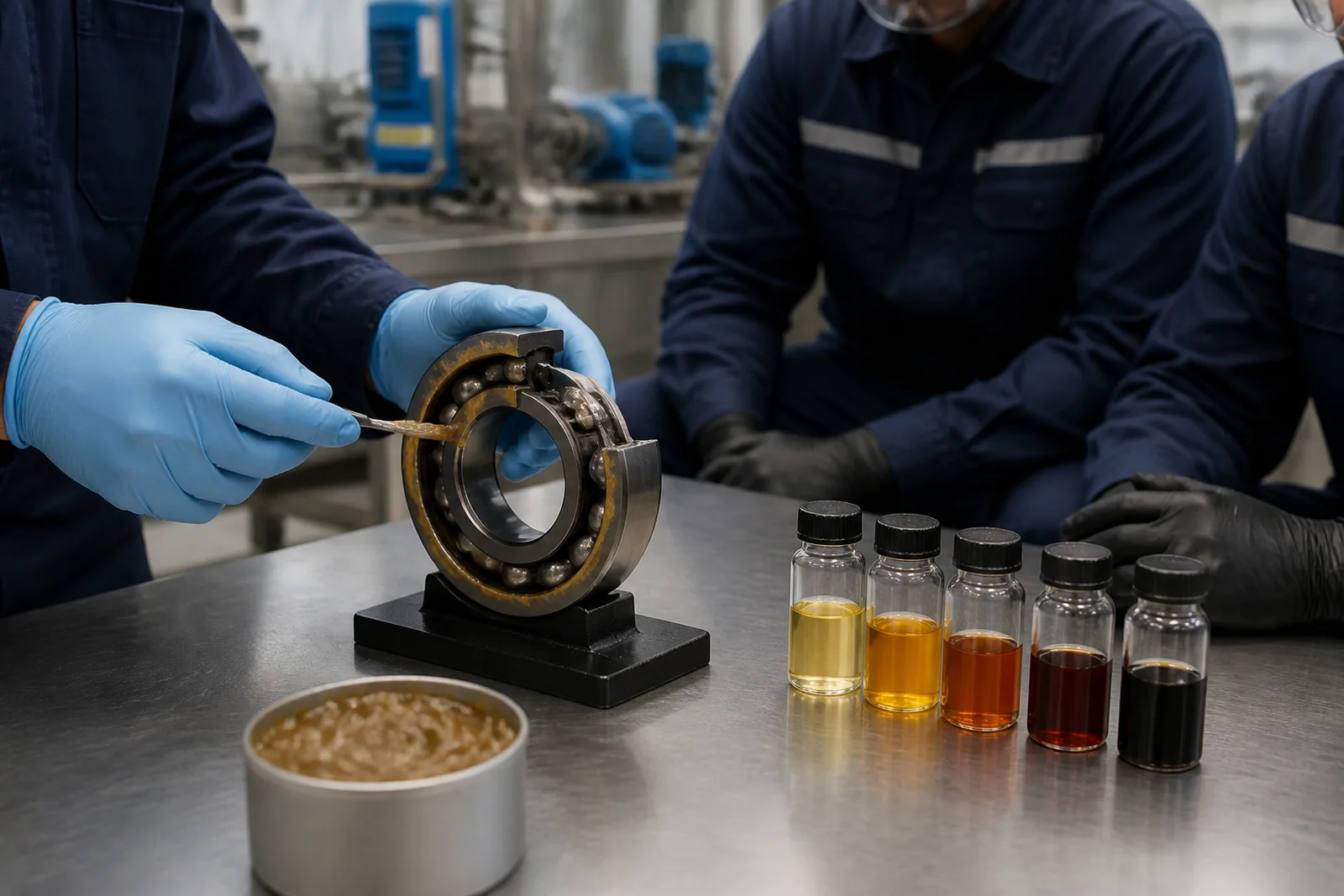
Service lens
Practice before the decision is urgent
The supporting visual keeps learning close to the bearing, sample, report or process the team must handle after the session.
- 01Real work context
- 02Role-based exercise
- 03Reusable checklist
Who it is for
Built around your operation and your team
The scope is adjusted to the site, business question and people who will use the result.
- Blending and grease-plant operators
- QC and laboratory technicians
- Maintenance and reliability teams
- Technical sales and distributor teams
- New R&D and production staff
- Plant managers and business owners
What you receive
Useful outputs, not a presentation that disappears
Every engagement is scoped around a decision, improvement or working system your team can continue using.
Training-needs review
A short discussion identifies participant roles, skill gaps, equipment and priority problems before the course is designed.
Custom course plan
A focused agenda covering only the topics that matter to the team, with the right balance of explanation and practice.
Practical session
Instructor-led exercises using samples, test reports, lubrication points, batch records or site examples where appropriate.
Learning pack
Participant notes, checklists and a completion record. It is a Lubechem training record, not an accredited qualification unless separately arranged.
How the engagement works
A clear route from brief to action
The order matters: first agree the question, then collect the right evidence, and only then recommend action.
- 1
Define the skill gap
We speak with the technical sponsor and identify the decisions the participants need to make confidently.
- 2
Build the right level
The agenda is adjusted for operators, technicians, engineers, sales teams or a mixed group.
- 3
Teach with real context
The session uses realistic samples, reports and scenarios rather than theory alone.
- 4
Check understanding
Questions, short exercises and a final action review show what the team can now apply.
- 5
Support adoption
Optional follow-up helps supervisors turn learning into updated routines, checklists or coaching.
Ways to engage
Start focused. Expand only when it adds value.
Final scope, timing and fees are confirmed after a short requirement review.
New teams and mixed roles
Foundation workshop
- Lubricant and grease basics
- Storage, handling and contamination
- Common mistakes and safe practice
QC, production or maintenance
Role-based programme
- Custom technical modules
- Reports and practical exercises
- Site-specific action checklist
Plants building a training system
Capability partnership
- Skills matrix and training calendar
- Multiple role-based sessions
- Supervisor follow-up and refresher plan
Before we begin
Information that helps us scope the work
- Participant roles and experience
- Main products, machines or processes
- Recent quality or maintenance problems
- Preferred delivery language and format
- Site safety and access requirements
Reference-led practice
Standards, research and industry evidence behind the scope
These sources inform the service design. Linked patents are technical references, not a claim that Lubechem owns or uses the patented invention.
Common questions
What clients usually ask first
Can the training be delivered at our plant?
Yes. On-site delivery is often the most useful because examples can be linked to your equipment, samples and working practices. Live online sessions are also available.
Is this only for lubricant manufacturers?
No. Programmes can be designed for lubricant and grease manufacturers, machine shops, fleets, power plants and other industrial users.
Do participants receive a certificate?
Participants can receive a Lubechem record of participation or completion. It should not be presented as an accredited professional certification.
Start with the real requirement
Tell us what needs to improve, be verified or be built.
Share the site, team, product or equipment involved and the decision you need to make. We will recommend a sensible first scope.
Start a technical discussion