Reliability improvement 06
Industrial Lubrication Management and Plant Surveys
Create a controlled route from lubricant selection and storage to the exact point where it protects the machine.

Why this service
Make lubrication a managed maintenance process
Many plants carry too many products while still missing basic controls at the machine. A lubrication survey brings the equipment, lubricant, interval, method, storage and responsibility into one clear system.
We start with the plant’s real machines and maintenance constraints, then build a practical improvement plan. The objective is not to change every product; it is to reduce avoidable variation, contamination and uncertainty.
One source of truth
Create an accurate register of lubrication points, products, quantities and tasks.
Simpler product control
Identify safe opportunities to rationalize products and reduce storage confusion.
More consistent execution
Give technicians routes and instructions they can follow and supervisors can verify.
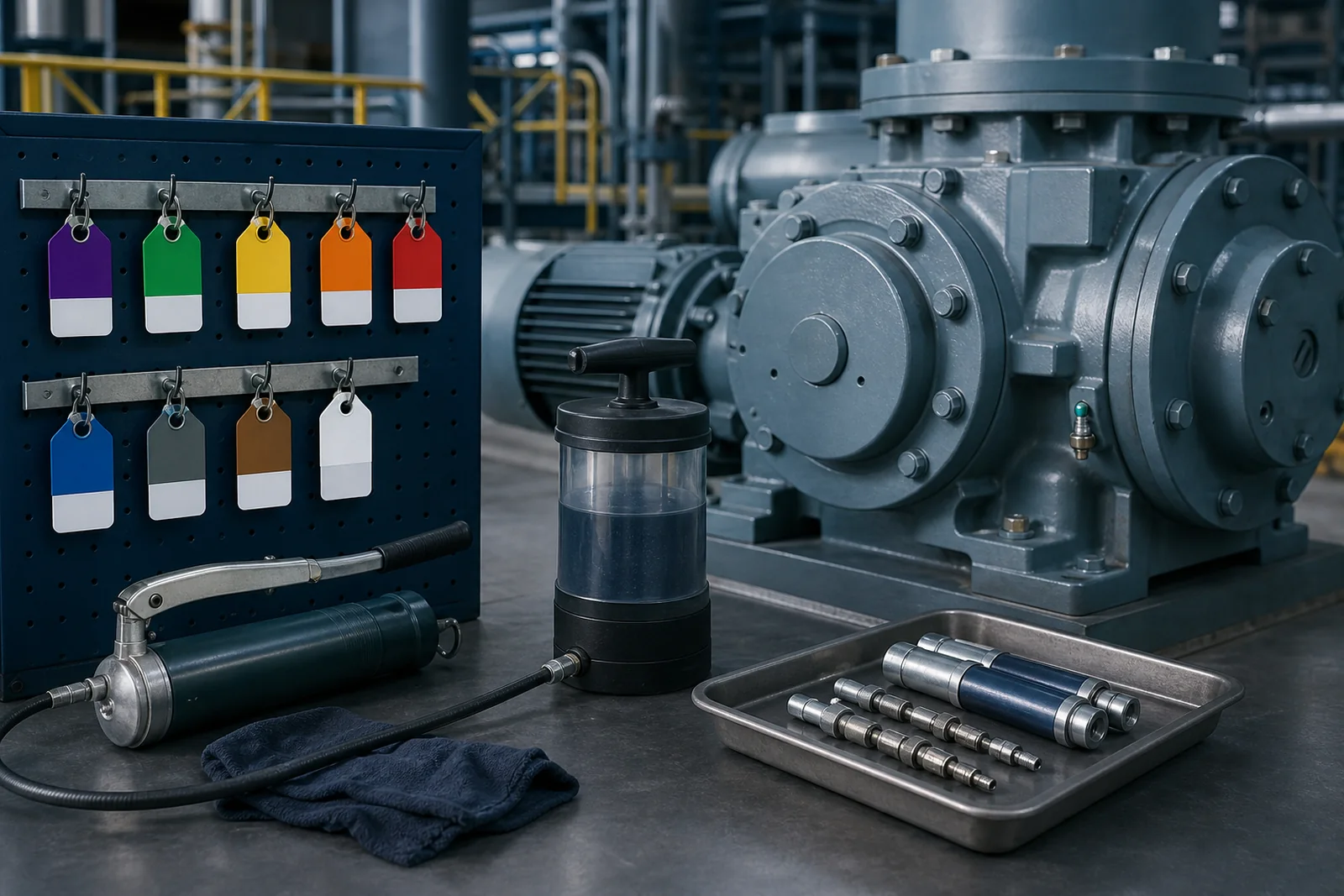
Service lens
Control the route from store to machine
Identification, transfer tools and lubrication points are treated as one reliability system rather than isolated tasks.
- 01Correct lubricant
- 02Clean transfer
- 03Verified point
Who it is for
Built around your operation and your team
The scope is adjusted to the site, business question and people who will use the result.
- Manufacturing plants
- Steel, cement and mining operations
- Food and pharmaceutical facilities
- Power and utilities
- Warehouses and material handling
- Maintenance contractors
What you receive
Useful outputs, not a presentation that disappears
Every engagement is scoped around a decision, improvement or working system your team can continue using.
Lubrication survey
Field verification of selected machines, lubricant points, current products and maintenance practice.
Lubrication-point register
Equipment, point, product, quantity, interval, method and responsibility in a usable format.
Storage and handling review
Receiving, identification, transfer, dispensing, contamination and housekeeping controls.
Improvement roadmap
Prioritized changes covering products, routes, hardware, training, analysis and governance.
How the engagement works
A clear route from brief to action
The order matters: first agree the question, then collect the right evidence, and only then recommend action.
- 1
Set plant boundaries
Define areas, critical equipment and the existing maintenance information available.
- 2
Walk and verify
Inspect selected assets and compare plant practice with records and lubricant recommendations.
- 3
Build the register
Standardize the information needed for each lubrication task.
- 4
Prioritize improvements
Separate fast housekeeping wins from engineering, hardware or product changes.
- 5
Embed the routine
Support route rollout, technician training and periodic review.
Ways to engage
Start focused. Expand only when it adds value.
Final scope, timing and fees are confirmed after a short requirement review.
One line or production area
Area survey
- Selected asset walkdown
- Lubrication-point register
- Focused action plan
Site-wide control
Plant lubrication programme
- Full survey and route structure
- Product and storage review
- Implementation roadmap
Ongoing reliability work
Managed improvement
- Periodic site review
- Training and route verification
- Condition-monitoring integration
Before we begin
Information that helps us scope the work
- Equipment list and plant areas
- Current lubricant list
- Maintenance routes or schedules
- Recent lubrication-related failures
- Site access and safety requirements
Reference-led practice
Standards, research and industry evidence behind the scope
These sources inform the service design. Linked patents are technical references, not a claim that Lubechem owns or uses the patented invention.
Common questions
What clients usually ask first
Will you recommend replacing all our lubricants?
No. Existing products are retained when they are suitable and controlled. Changes are recommended only where there is a clear technical or operational reason.
Can you create lubrication charts for our machines?
Yes. The register can be converted into route sheets, point labels or plant lubrication charts using verified equipment information.
Can this include oil analysis?
Yes. Critical assets can be connected to a used-oil sampling and trend programme.
Start with the real requirement
Tell us what needs to improve, be verified or be built.
Share the site, team, product or equipment involved and the decision you need to make. We will recommend a sensible first scope.
Start a technical discussion