Shop-floor fluid care 07
Metalworking Fluid Management for CNC and Machine Shops
Keep coolant concentration, cleanliness and condition within a controlled working range across machines and shifts.
Why this service
Manage the fluid as a working system, not just a drum of concentrate
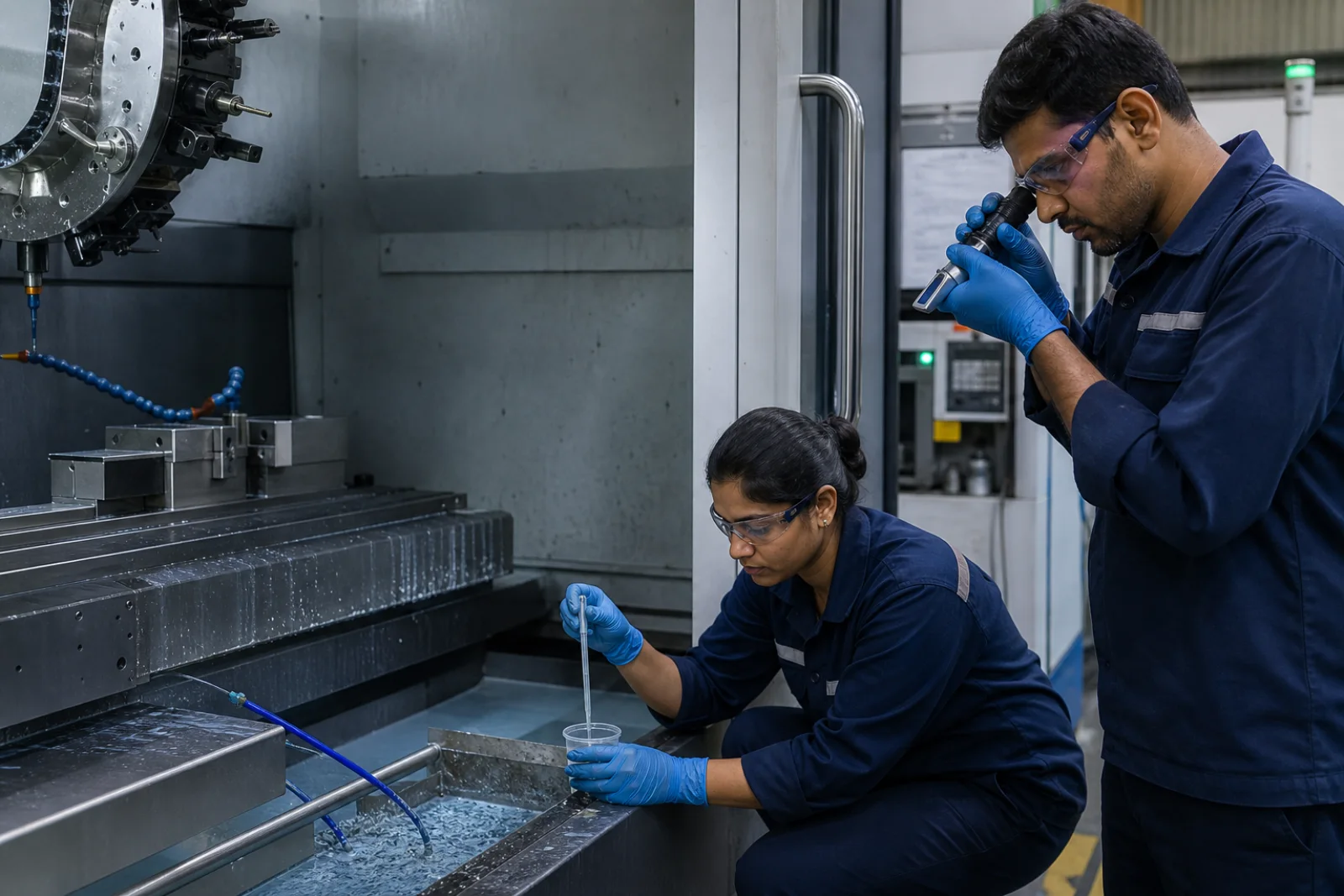
Water-miscible metalworking fluids change after they enter the machine. Water, tramp oil, metal fines, heat, make-up practice and microbial activity can affect performance and working conditions. A useful programme therefore combines checks, housekeeping and clear response rules.
We review the machining operation, alloy, water, coolant, sump and operator routine, then build a manageable control plan for the site. The level of testing is matched to the problem instead of turning every sump check into a laboratory project.
Stable daily control
Give operators simple ranges, checks and escalation rules for routine fluid care.
Longer useful sump life
Address make-up, tramp oil, filtration, cleaning and contamination practices together.
Faster troubleshooting
Connect foam, corrosion, odour, residue or tool-life concerns with the right evidence.
Service lens
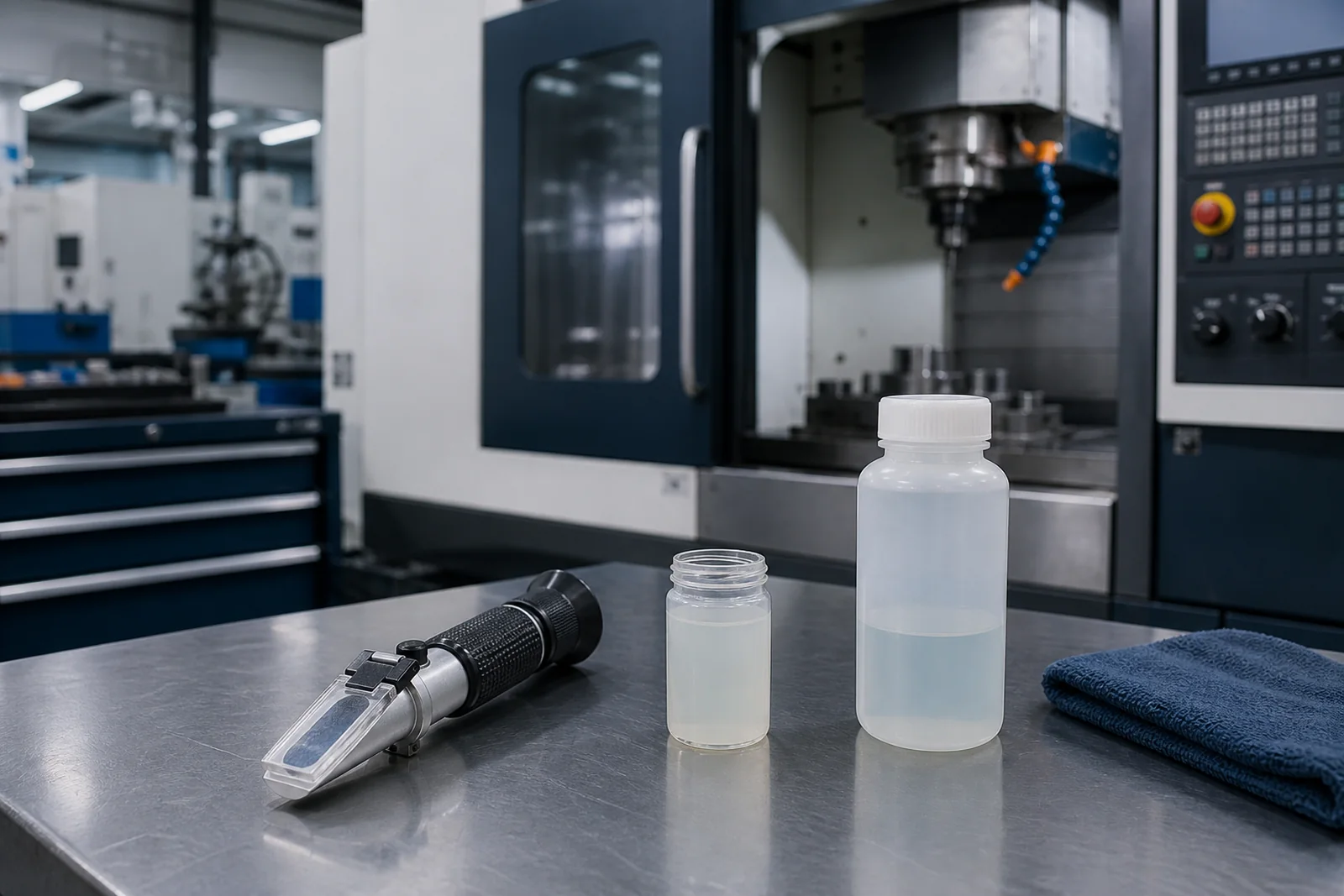
Keep fluid condition visible on the shop floor
Concentration, water, contamination and sump condition are checked through a repeatable routine linked to machine performance.
- 01Baseline condition
- 02Daily control
- 03Escalation limit
Who it is for
Built around your operation and your team
The scope is adjusted to the site, business question and people who will use the result.
- CNC machining plants
- Grinding and honing operations
- Automotive component manufacturers
- Metal forming and stamping plants
- Central coolant-system users
- Tool rooms and contract manufacturers
What you receive
Useful outputs, not a presentation that disappears
Every engagement is scoped around a decision, improvement or working system your team can continue using.
Machine and sump survey
Operation, alloy, water, product, concentration, visible condition and current maintenance practice.
Control-point plan
Practical checks for concentration, pH and other site-relevant indicators with response guidance.
Cleaning and recovery guidance
Machine clean-out, make-up, skimming, filtration and escalation recommendations.
Operator routine
Simple log sheet, task ownership and coaching for consistent work across shifts.
How the engagement works
A clear route from brief to action
The order matters: first agree the question, then collect the right evidence, and only then recommend action.
- 1
Map the operation
Record machines, metals, tools, coolant, water source and current failure symptoms.
- 2
Inspect representative sumps
Check condition, make-up practice, tramp oil, fines, aeration and housekeeping.
- 3
Confirm the evidence
Use field checks and selected laboratory tests where the question requires them.
- 4
Set control ranges
Build clear daily or weekly checks and corrective actions around product guidance.
- 5
Review performance
Track repeated problems, fluid life, operator compliance and trial outcomes.
Ways to engage
Start focused. Expand only when it adds value.
Final scope, timing and fees are confirmed after a short requirement review.
Foam, odour, corrosion or instability
Problem-sump diagnostic
- Focused site review
- Sample and cause assessment
- Corrective-action note
Multiple CNC machines
Machine-shop fluid survey
- Representative sump checks
- Control log and response rules
- Operator briefing
Central systems and recurring issues
Managed fluid programme
- Scheduled checks and trend review
- Training and housekeeping control
- Trial and improvement support
Before we begin
Information that helps us scope the work
- Machine and operation list
- Coolant product and mix guidance
- Water quality information
- Current logs and failure symptoms
- Health, safety and waste controls
Reference-led practice
Standards, research and industry evidence behind the scope
These sources inform the service design. Linked patents are technical references, not a claim that Lubechem owns or uses the patented invention.
Common questions
What clients usually ask first
Do you sell coolant chemicals or biocides?
This service is independent technical management. Product supply can be considered separately, but corrective actions are based on the actual fluid, machine and safety context.
Can you manage a central coolant system?
Yes. Central systems need a defined sampling plan, control ranges, contamination management and clear ownership across production and maintenance.
Can the service help with operator skin or respiratory complaints?
We can review fluid-management and work-practice factors, but occupational exposure and medical concerns must be handled with competent EHS and occupational-health professionals.
Start with the real requirement
Tell us what needs to improve, be verified or be built.
Share the site, team, product or equipment involved and the decision you need to make. We will recommend a sensible first scope.
Start a technical discussion